GruntGod 2.13.4: The Poor (Military) People's Campaign
This is drawn from the revision of the Ralph chapter in the second edition of God Is a Grunt.
The 1968 Poor People's Campaign didn't come from nowhere, and neither did the version of it that Rev. William Barber, Rev. Liz Theoharis, and Jonathan Wilson-Hartgrove relaunched fifty years later. Both have a military prehistory that gets left out of most retellings, including, in the interest of keeping the book chapter moving, my own. Here's the fuller version.
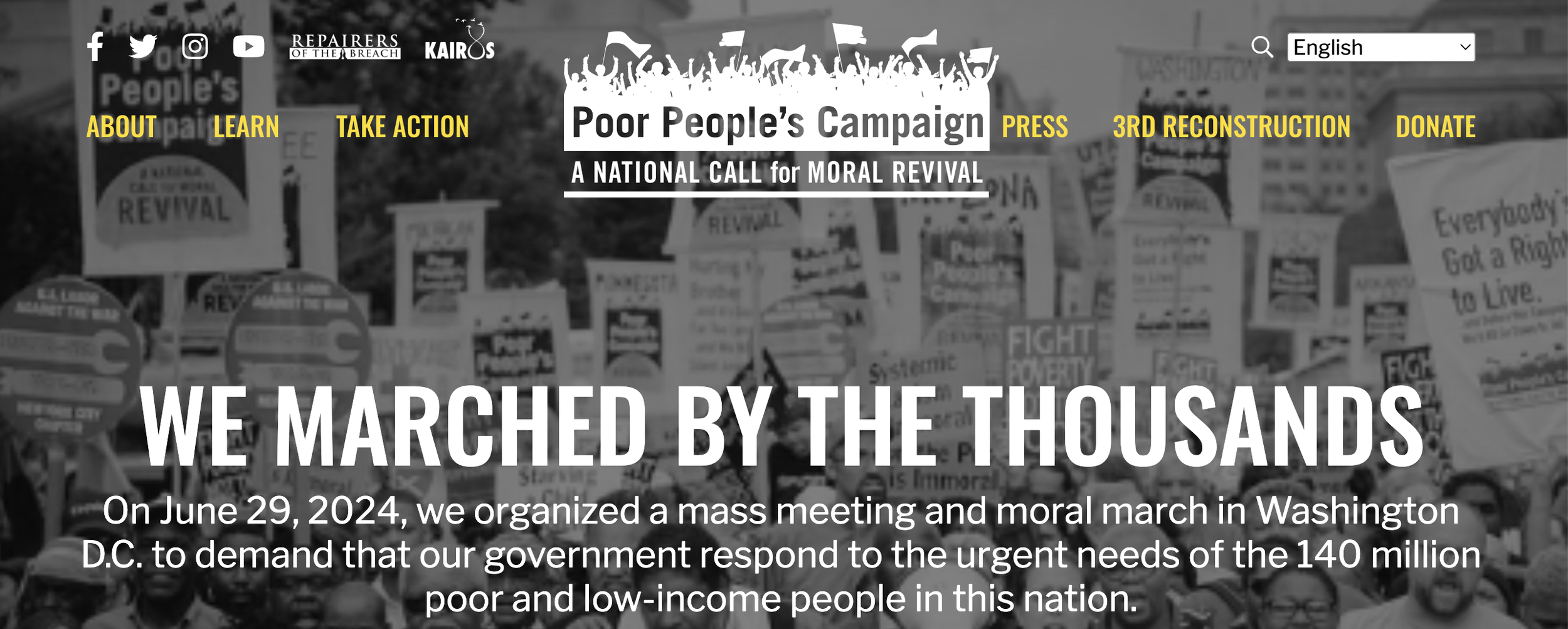
Screenshot of the 2018 Poor People’s Campaign (don’t worry, it won’t add you to donor prospecting lists)
Father James Cox was a Catholic hospital chaplain in France during World War I who came home radicalized by what he'd seen. This was the same period in which Pope Leo XIII's Rerum Novarum was reaching a new generation of Catholic labor activists through its fortieth-anniversary reissue as Pius XI's Quadragesimo anno. In January 1932, in the depths of the Depression, "the Pastor to the Poor" led twenty thousand Pennsylvanians to Washington, DC, demanding antipoverty and employment legislation. Cox's Army, as it became known, was the largest and most orderly demonstration the capital had ever seen. They didn't get everything they wanted, but they got organized enough to form the Jobless Party and keep pushing.
Five months later, with Cox himself a minor contender for the Democratic presidential nomination, a much bigger and much more consequential march arrived in Washington: the Bonus Army, roughly twenty thousand poor Black and White veterans, many with their families, demanding Congress pay the service bonus it owed them from World War I. Rather than march there and back the way Cox's Army had, the Bonus marchers set up a shantytown they called Camp Marks, after a sympathetic DC police chief, and settled in.
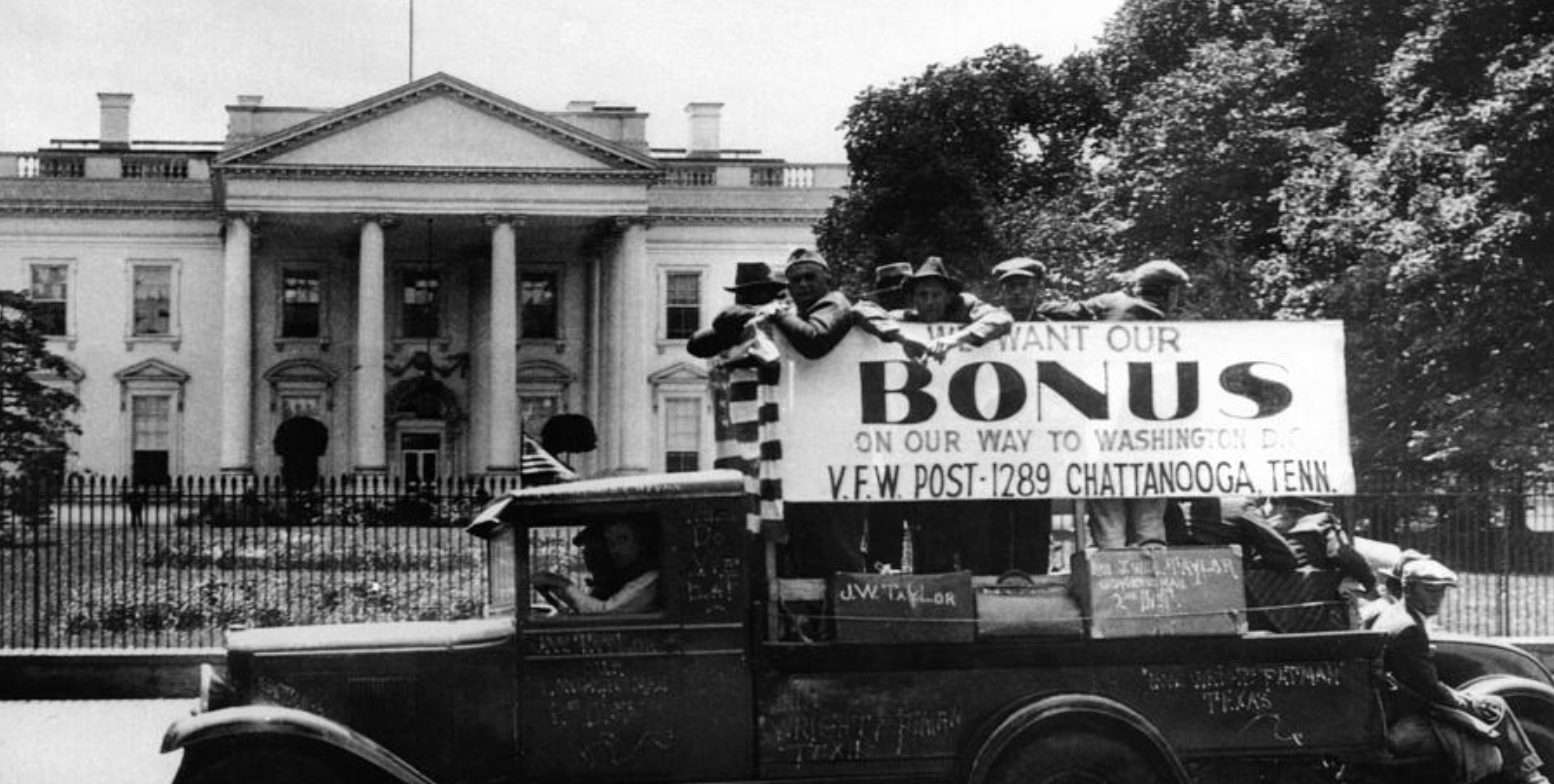
VFW stands for Veterans of Foreign Wars, who marched for their Bonuses. Now VFW stands for nothing.
Camp Marks stood for about a month. On July 28, 1932, active-duty units of the Third Cavalry, under the command of George Patton — the same general who'd later slap two shell-shocked privates in Sicily and get away with it — moved in to clear it out. When the soldiers started forming up, the Bonus marchers actually applauded, assuming the troops had come to support them. Six tanks leveled the camp. Infantry with fixed bayonets and tear gas finished the job. Two veterans were killed. One of their wives miscarried. Fifty-five people were injured and 135 arrested, on the theory that a camp of destitute veterans asking for money they were owed constituted an attempt to overthrow the government.(!)
The debacle helped sink Herbert Hoover's reelection and helped push an overtly reluctant Franklin Roosevelt toward signing the Servicemen's Readjustment Act of 1944 — the GI Bill. So in a very direct sense, every veteran who's used the GI Bill since owes something to the people who got run out of Camp Marks by tanks.
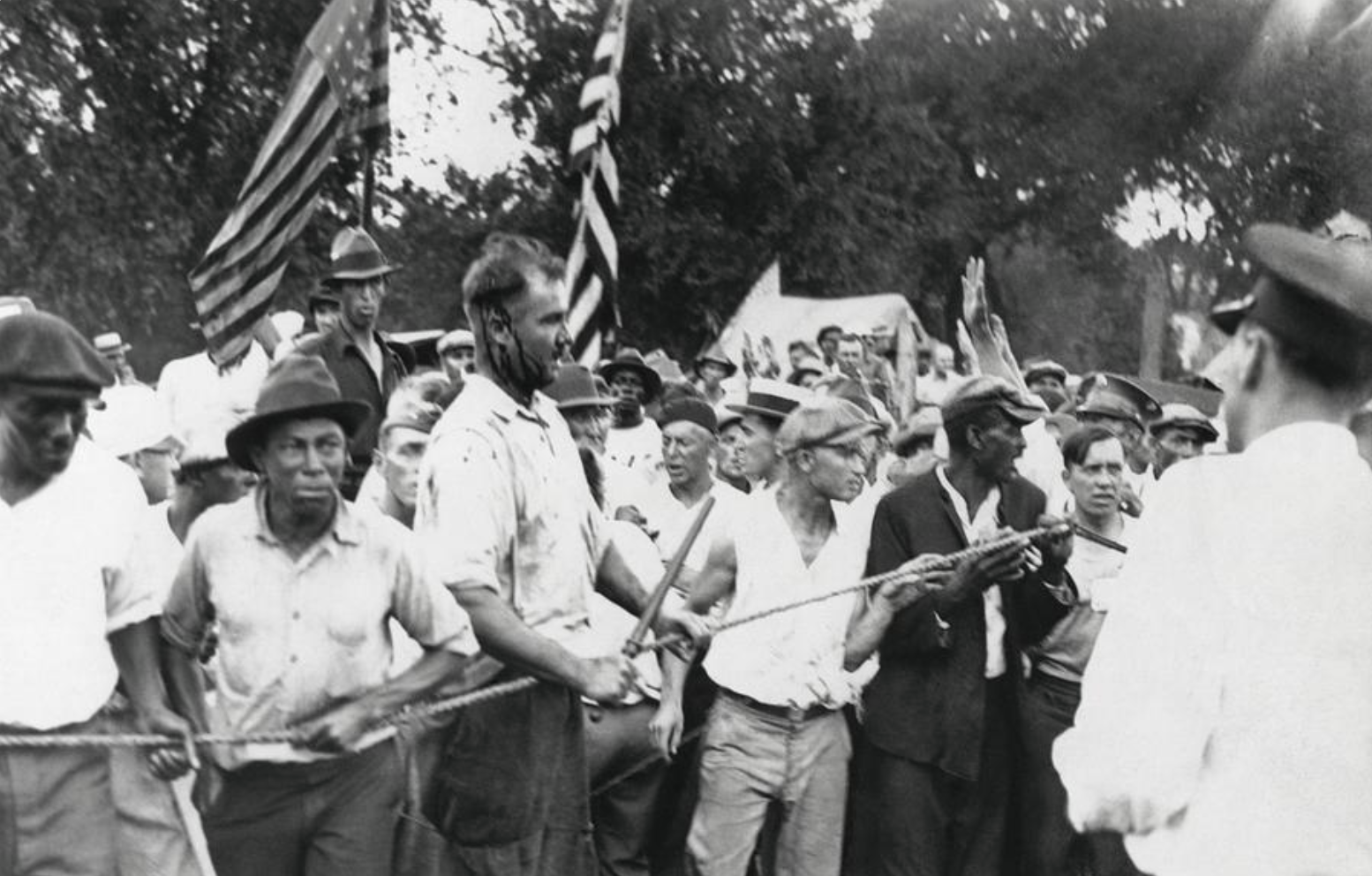
Bonus March soldiers integrated before the regulars did. Surprised?
Ralph Abernathy and Martin Luther King Jr.'s 1968 Poor People's Campaign was a conscious spiritual descendant of both Cox's Army and the Bonus Army: clergy-adjacent leadership, an election-year push for an "Economic Bill of Rights," and eventually an encampment of their own. They'd originally planned to launch the campaign from Marks, Mississippi, a town whose name would have echoed Camp Marks on purpose, where Ralph had wept at the sight of malnourished Black schoolchildren. What they built on the National Mall instead, Resurrection City, was Camp Marks reborn: Black and White military and civilian families camped side by side, demanding the country make good on what it owed the poor, before the military-civilian gap was monetized.
Resurrection City failed to secure its demands, same as Camp Marks had. Fifty years later, Barber, Theoharis, and Wilson-Hartgrove revived the name and the framework for their own Poor People's Campaign. What they didn't revive is the specific commitment to veterans that ran through both of its predecessors. Cox's Army was poor civilians. The Bonus Army and Resurrection City were led, in large part, by people who'd worn the uniform and understood the rights-obligation trade-off from the inside. The current campaign talks about veterans occasionally) I get into exactly how, and why it bothered me enough to pick a fight with Bishop Barber on Twitter, in the chapter itself) but talking about veterans and organizing with them as full partners in their own liberation are not the same thing. Cox's Army and the Bonus Army both understood that difference. I'm not sure the current campaign does.
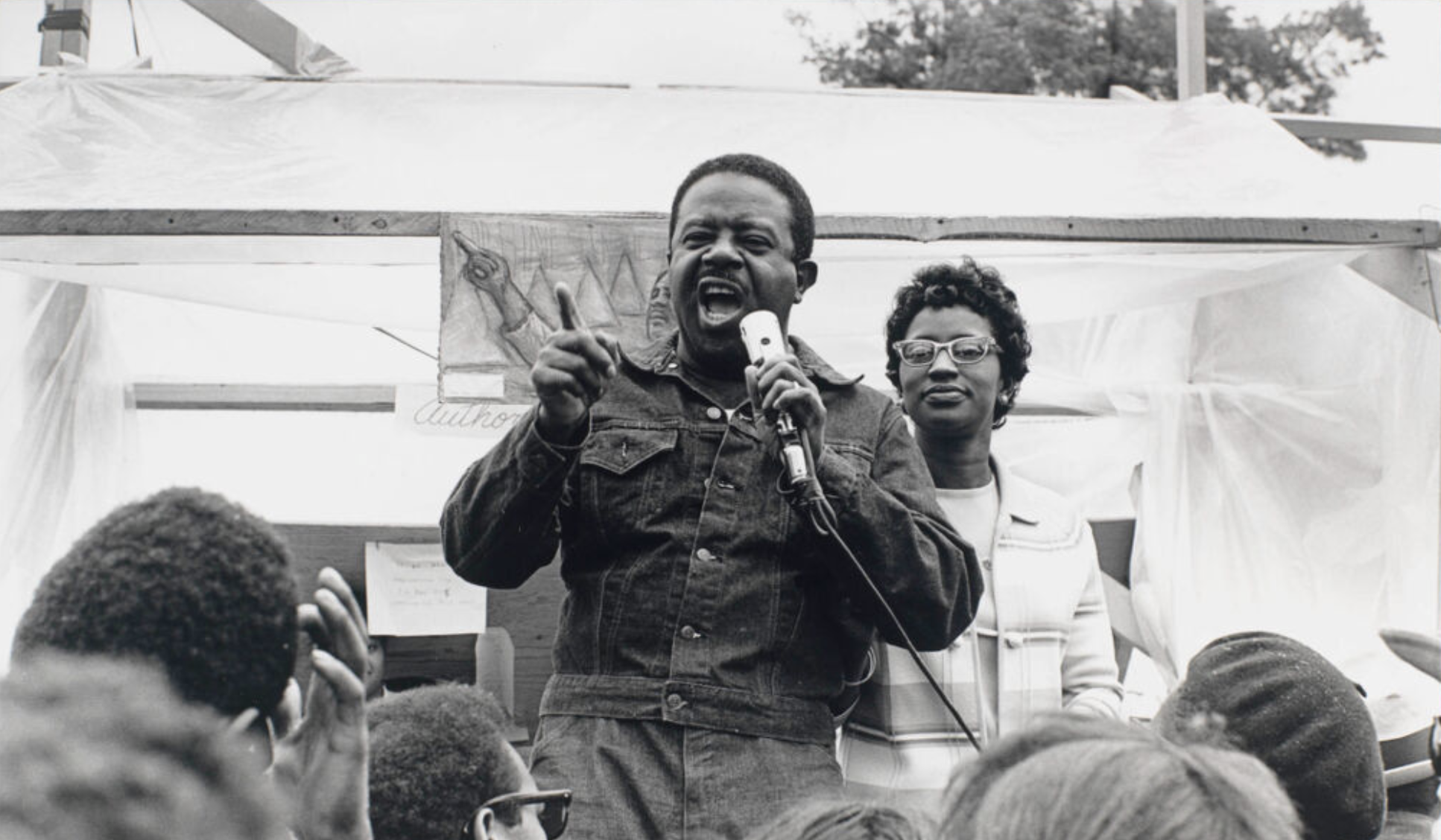
“Rev. Ralph Abernathy, Leader of the Poor People's Campaign, Addresses a Group of Protesting Squatters, ‘Resurrection City,’ Washington, D.C.” by Constantine Manos. Click for source.