GruntGod 2.4.5: Military Brat Messiah
The Tribal Geography of Jesus' Ministry
From the revision of God Is a Grunt, Chapter 4: Christ as Divine Warrior
Here's something your pastor probably never told you: “Jesus” (real name: Joshua) grew up in a military town and spent his ministry in military communities.
I don't mean Roman military. I mean Israelite military — the tribal territories associated with Israel's most formidable fighting forces, which by Joshua’s day had become Israel's most despised veterans.
Zebulun, whose name means "honor" (zāḇal, H2082), was the youngest of Leah's six sons by Jacob. Naphtali, whose name evokes "wrestling" (nap̄tûlîm, H5319), was the youngest of Bilhah's two sons, foreshadowing his father Jacob's own wrestling with God. These two tribes were Israel's military backbone.
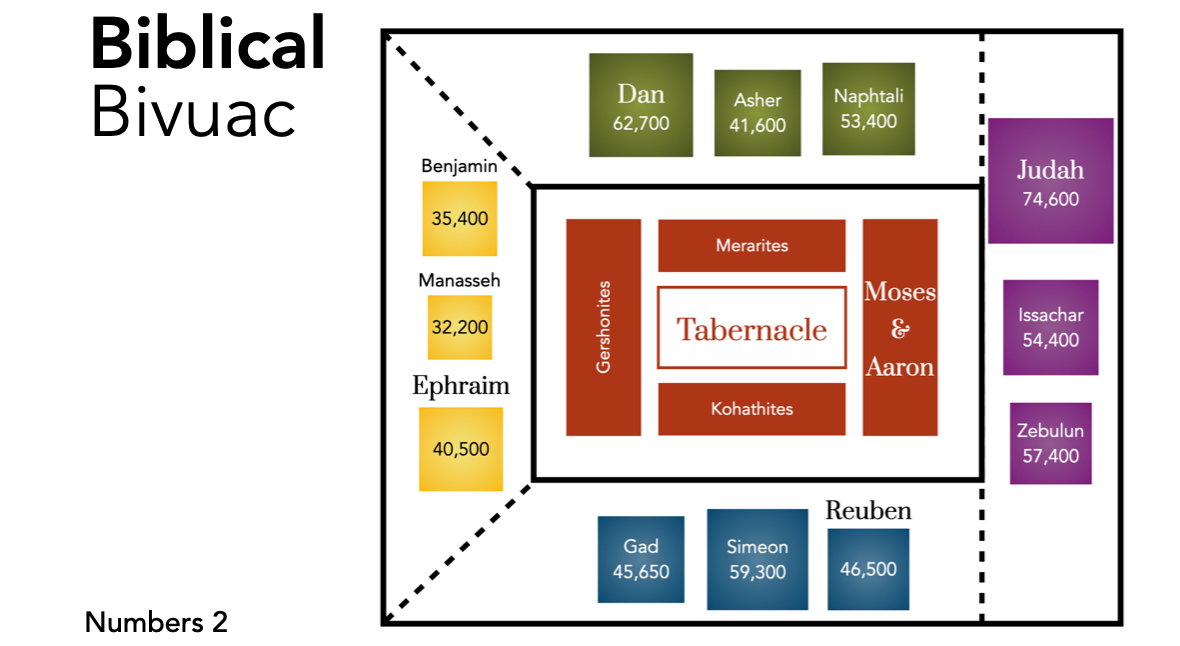
The evidence is everywhere in the text. During the desert wanderings, when the Israelites marched, Zebulun was in the vanguard with Judah and Issachar. Naphtali brought up the rear with Dan and Asher. Any grunt recognizes this: highest ranking up front, second in command covering the six. When they encamped, Zebulun was part of Judah's regiment on the prestigious east side, nearest the Tabernacle entrance. Naphtali was beside them on the north.
After Joshua's campaign, the two tribes became neighbors — Naphtali above the Sea of Galilee, Zebulun to the south and west. The Song of Deborah, considered the oldest text in the Hebrew Bible, records how these two tribes "scorned death" (Judg. 5:18) at Mount Tabor against Sisera. Zebulun is singled out as the bearer of Israel's shevet safar — literally the "guidon of order" (Judg. 5:14, combining H7626, staff, with H5608, scribe/accountant). A chapter later, Gideon calls on both tribes to fight near "the hill of Moreh" (Judg. 7:1), where they pull off an impossible victory against the Midianites.

Then the bottom fell out. When the kingdom divided after Solomon, these border tribes became vulnerable. Zebulun and Naphtali were the first carried off into exile by Assyria in the eighth century BCE. Isaiah says they languished "in a land of deep darkness" (Isa. 9:2). And here's the detail that should hit military families in the gut: although eight other tribes were eventually scattered, it was specifically Zebulun and Naphtali who were "brought into contempt" (Isa. 9:1). The best soldiers became the biggest embarrassment.
The pattern should sound familiar. Serve with distinction, come home broken, get treated like a liability.

Now read Matthew 4:12-16. As soon as Joshua+ hears of John's arrest, he moves to Capernaum — in the land of Naphtali, near Zebulun — "so that what had been spoken through the prophet Isaiah might be fulfilled." Matthew is explicit about this. Joshua+ doesn't end up in Galilee by accident. He goes there on purpose, to fulfill a prophecy about disgraced military communities seeing a great light.
Mount Tabor, where Deborah and Ja'el defeated Sisera, is also the traditional site of the Transfiguration. The hill of Moreh, where Gideon routed the Midianites with Zebulun and Naphtali, is in Nazareth's neighborhood. When Isaiah says the coming deliverance will be "as on the day of Midian" (Isa. 9:4), the geographic echo is unmistakable.
God didn't just tolerate military communities. God chose them first. And not when they were winning — when they were in contempt.
This post draws on Hebrew etymologies and tribal geography revised from the second edition of God Is a Grunt. The book version tells this story without the linguistic apparatus; the deep dive lives here for those who want to see the original languages at work.