WhatAboutUS 1.1: Harnack on the Soldiers
What Militia Christi Actually Says
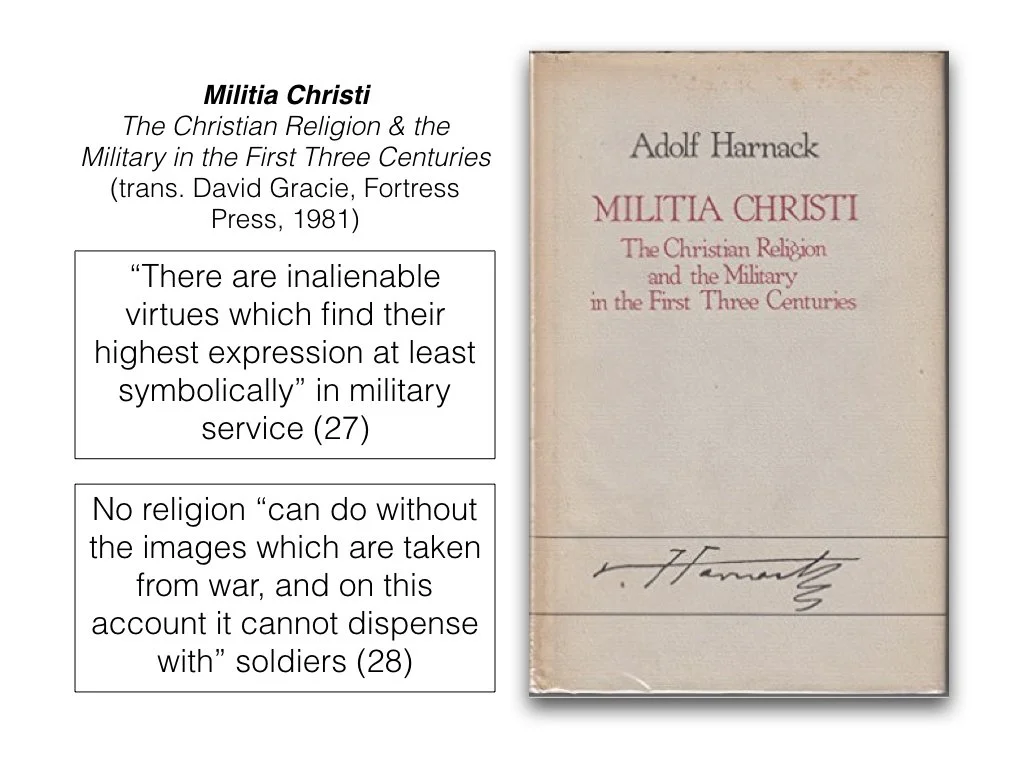
Adolf von Harnack gets filed with the scholars who think the early church was pacifist. But read Militia Christi (Tübingen, 1905) and the filing gets harder to defend.
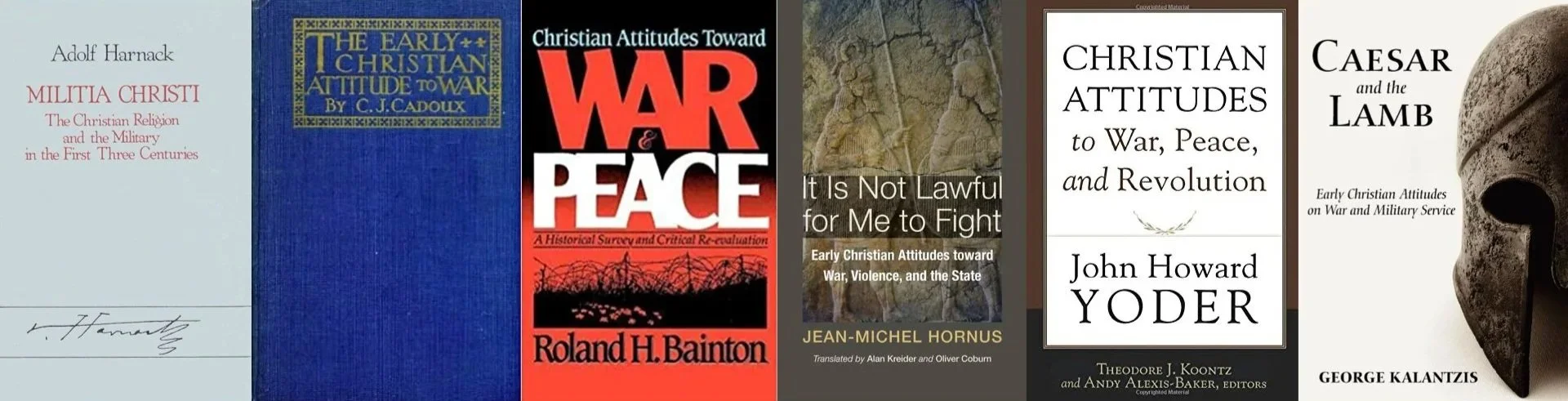
He did think the earliest Christian ethic ruled out volunteering for the army. Joshua+ had forbidden revenge and taught gentleness, and the soldier’s trade was contemptible for its extortion, violence and police work. So, he writes, “a Christian could not voluntarily become a soldier” (48). He thought the first Christians kept that rule and that it cost them little, because there was no general conscription. On his account the “soldier question” didn’t become urgent in the churches until about the time of Marcus Aurelius (c. 51).
That is half of what he wrote. The other half is about the soldiers already in the text.
The soldier detail is incidental. The stories of the centurions at Capernaum, at the cross and at Caesarea, he says, “were not told to praise the soldier’s estate or even to suggest tolerating it. That they were soldiers is, in all these cases, of subordinate importance to the narrator” (52). That cuts two ways. It rules out the reading that the evangelists were quietly endorsing soldiering. It also cuts against the claim that the soldier’s identity is the point, whether as an oddity or as the “most unsavory characters” in the story, as Richard Hays puts it.
Luke 3:14 gets more. “More may be inferred from Luke 3:14,” he writes (53). John’s answer to the soldiers matches what he tells the tax collectors: “not flight from the occupation and the world is demanded, but simple morality.” Luke wrote for Gentile Christians, not Jews, so the mention of soldiers stands out. Harnack concludes Luke wanted his readers to know that a Christian soldier proves his faith by staying clear of plunder and extortion. That would mean “toleration of the soldier’s estate,” and “one may suppose that Luke wanted to be understood so.” The objection that John is speaking rather than Jesus is “hardly significant” (53).
The Fathers took it seriously. Clement of Alexandria repeated John’s word to the soldiers and gave it the weight of a saying of the Lord (53 n.; 58). Tertullian’s opponents cited the Baptist, Moses, Aaron, Joshua and the Capernaum centurion. Harnack calls the New Testament evidence “very strong and really not to be refuted,” and Tertullian’s counter, that Christ disarmed every soldier when he disarmed Peter, “a rather contrived proof.” He also notes Tertullian leaves out the centurion of Caesarea (61).
Tolerated, never recommended. Harnack’s frame is double (52–53). The emperor holds a sword God gave him. To the extent soldiers keep order, they are necessary and tolerated. To the extent they serve the devil’s state and shed innocent blood, they belong to the devil. “No Christian could recommend it,” he writes.
What he doesn’t ask. On the soldiers themselves he gives one clause, that those in Luke 3 are probably “Jewish soldiers in the army of Herod Antipas” (53), and one footnote on Jewish exemption (49). He gives no rank, no unit, no pay, no reason for enlisting. His tools are audience criticism and reception history. He points them at Luke’s readers and Tertullian’s opponents, not at the men at the river. The next two posts for What About US work on that gap.