WhatAboutUS 1.2: Cadoux and the Centurion
C. J. Cadoux’s The Early Christian Attitude to War (London, 1919) is the most careful English-language case that the early church was pacifist. He is also more honest about his weak points than he usually gets credit for. The Capernaum centurion, known in Acts 10 and 11 as Cornelius, is one of them.
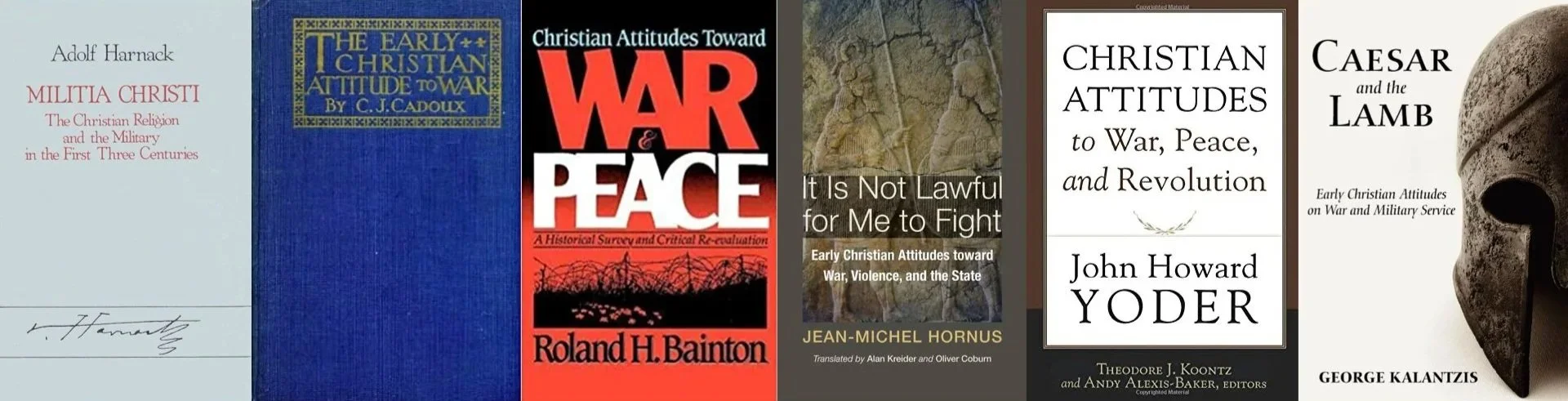
Cadoux builds his case in Part I, on the teaching of Joshua+ (pp. 19–47). He argues that “a large and important phase of his teaching and practical life cannot be accounted for without the supposition that he regarded acts of war as entirely impermissible to himself and his disciples” (20). Every soldier text then has to fit that predetermined conclusion.
On CPT Marvel of Capernaum he concedes the ground. Christ “not only [healed the servant], without (as far as the record goes) uttering any disapproval of the man’s profession, but even expressed appreciation of his faith.” Then he turns:
“No conclusion, however, in conflict with the position already reached can be founded on this incident. The attempt to draw such a conclusion is at best an argument from silence... we cannot be at all sure that he said nothing on this occasion about the illegitimacy of military service for his own followers.” (83)
He adds that the centurion was “a gentile stranger” who, in Luke, “was not even present in person” and “was not a candidate for discipleship.” The utmost he’ll say is that “the mind of the Christ was not focussed on the ethical question: but even that much is precarious” (83–84).
Credit where due. Cadoux flags his own move as defensive. He corrects Seeley’s Ecce Homo: the centurion’s “under authority” wasn’t humility but belief that Joshua+ could heal “by word of command” (83 n.). And he calls the man a centurion “in the service of Herodes at Capernaum” (83). That is the right instinct. He never follows it anywhere beyond his own confirmation/civilian bias.
The silence is symmetrical. If silence can’t show Christ approved, it can’t show he prohibited. The pacifist reading has to stand on Part I alone. Cadoux effectively negates his own argument. Plenty of later arguments forget that critical point.
The count. On p. 228 he excludes “the converts of John the Baptist, the centurion of Capernaum, and the centurion at the cross, as not being disciples of [Joshua+] at all,” along with Sergius Paulus and the soldier executed with James. That leaves Cornelius and Dez, the Philippian jailer, as “the only real cases of Christian soldiers in New Testament times.” The test is “disciple of” Christ.
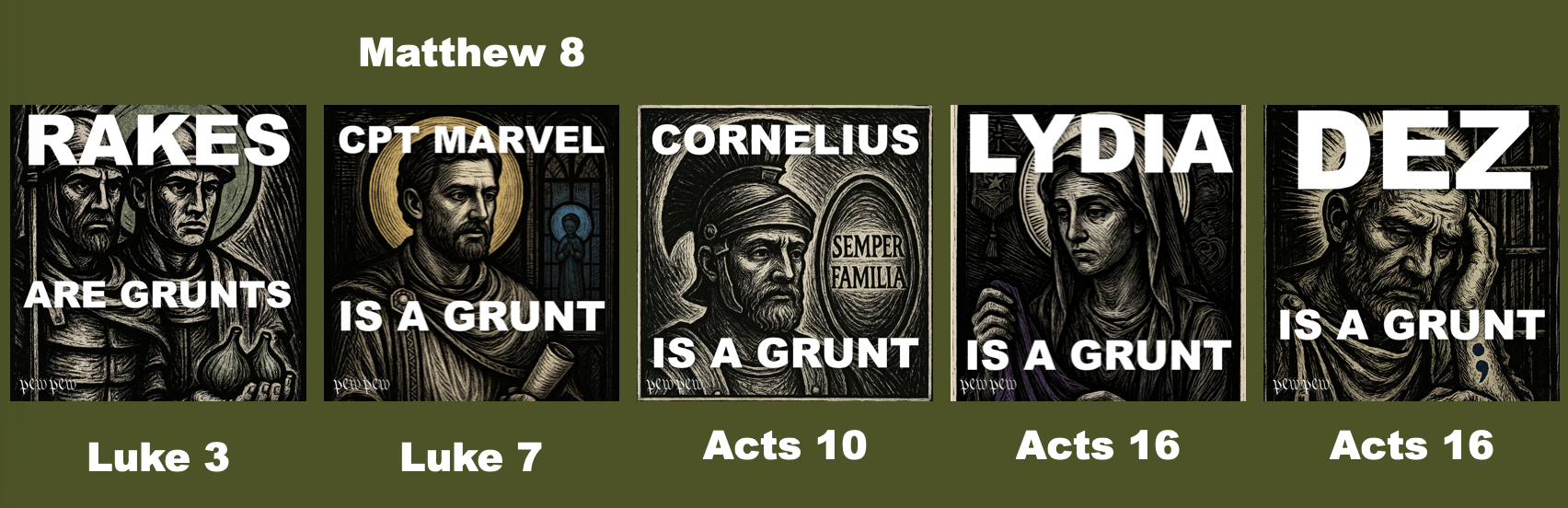
The test has trouble inside his own book. On p. 82 n. 3 he glosses the soldiers of Luke 3:14 as men “who had received his baptism.” Luke 7:29 says everyone who heard Jesus, tax collectors included, “had been baptized.” Cadoux also admits “it is even possible that Luke... may have meant to intimate thereby his view as to the propriety of admitting soldiers to the Church without requiring them to abandon the profession of arms” (228–29).
Ask who he was first. Cadoux’s first question is what Joshua+ said about soldiering. The first question should be who this man was. The text says the elders vouched for him and that he built the synagogue (Luke 7:3–5). He owns a slave (7:2), and he operates in Antipas’s Galilee. CPT Marvel was a local officer with a household and a standing, not an anonymous stranger. Ask whose army, what rank, and what he could refuse, and the silence has a setting. That doesn’t prove permission. It does change what kind of evidence we’re weighing.