GruntGod 2.4.2: God's Kit List
What Four Biblical Authors Agree (and Disagree) About Divine Armor
From the revision of God Is a Grunt, Chapter 4: Christ as Divine Warrior
Every soldier knows that your gear tells a story about your mission. Pack a plate carrier, extra ammo, and NODs, you're going outside the wire. Pack dress blues and a cover letter, you're going to a board. What you carry says what you're there to do.
God carries gear too, and four different biblical authors describe it. What's fascinating is how much they disagree about the details — and what they all agree on.
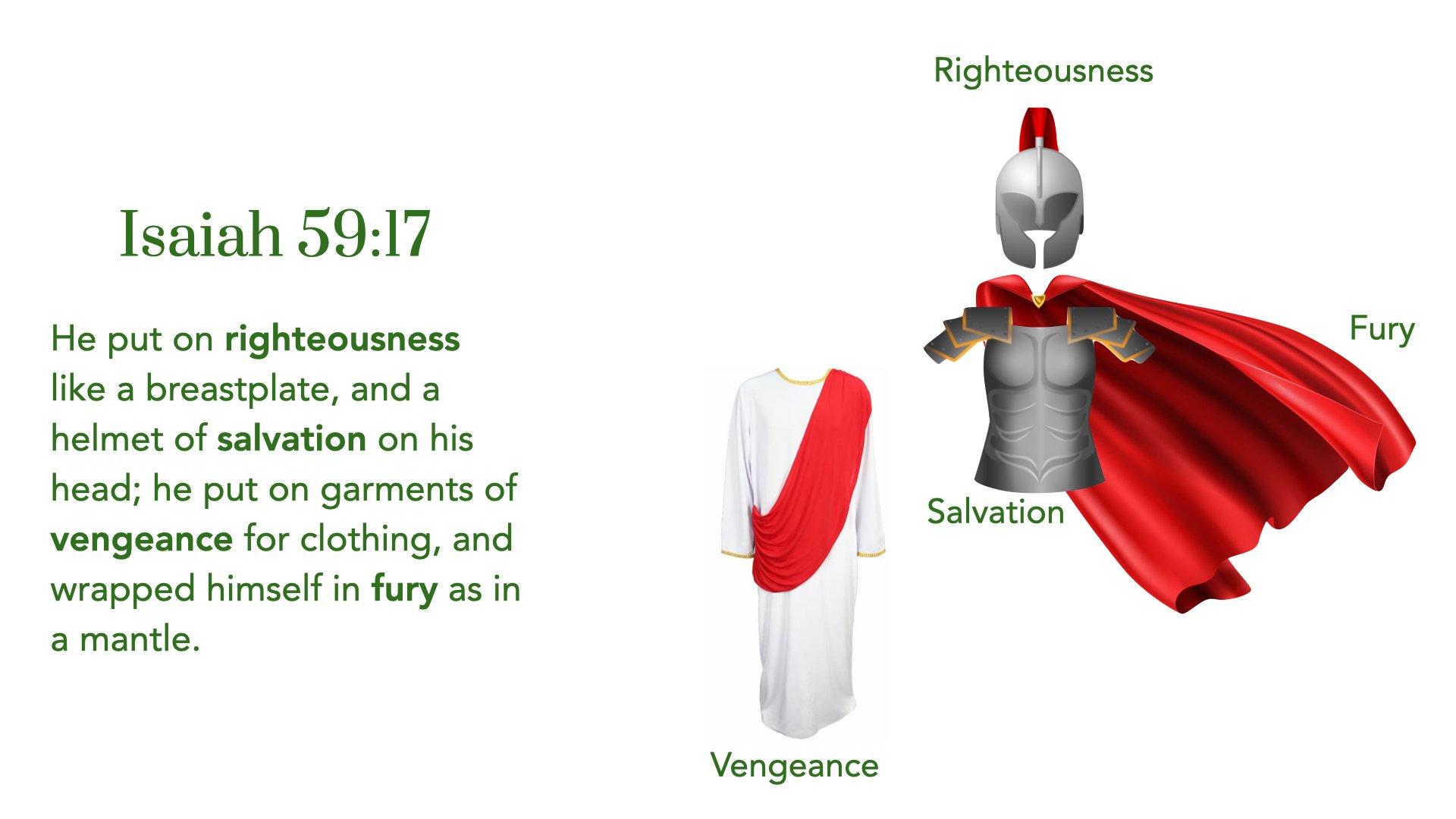
The oldest account is Isaiah 59:17. God wears a breastplate of righteousness, a helmet of salvation, garments of vengeance, and a mantle (cape or robe) of fury. No sword. No shield. But plenty of aggression — this is a God dressed for retribution.
The Wisdom of Solomon (5:17-20), written a couple centuries later, expands the kit. God now has zeal as whole armor, righteousness as a breastplate, impartial justice as a helmet, holiness as a shield, and stern wrath sharpened into a sword. The upgrade is notable: God now has both a defensive item (shield of holiness) and an offensive weapon (sword of wrath) that Isaiah's version lacked. The mood is still aggressive — it opens with "zeal" and closes with "wrath."

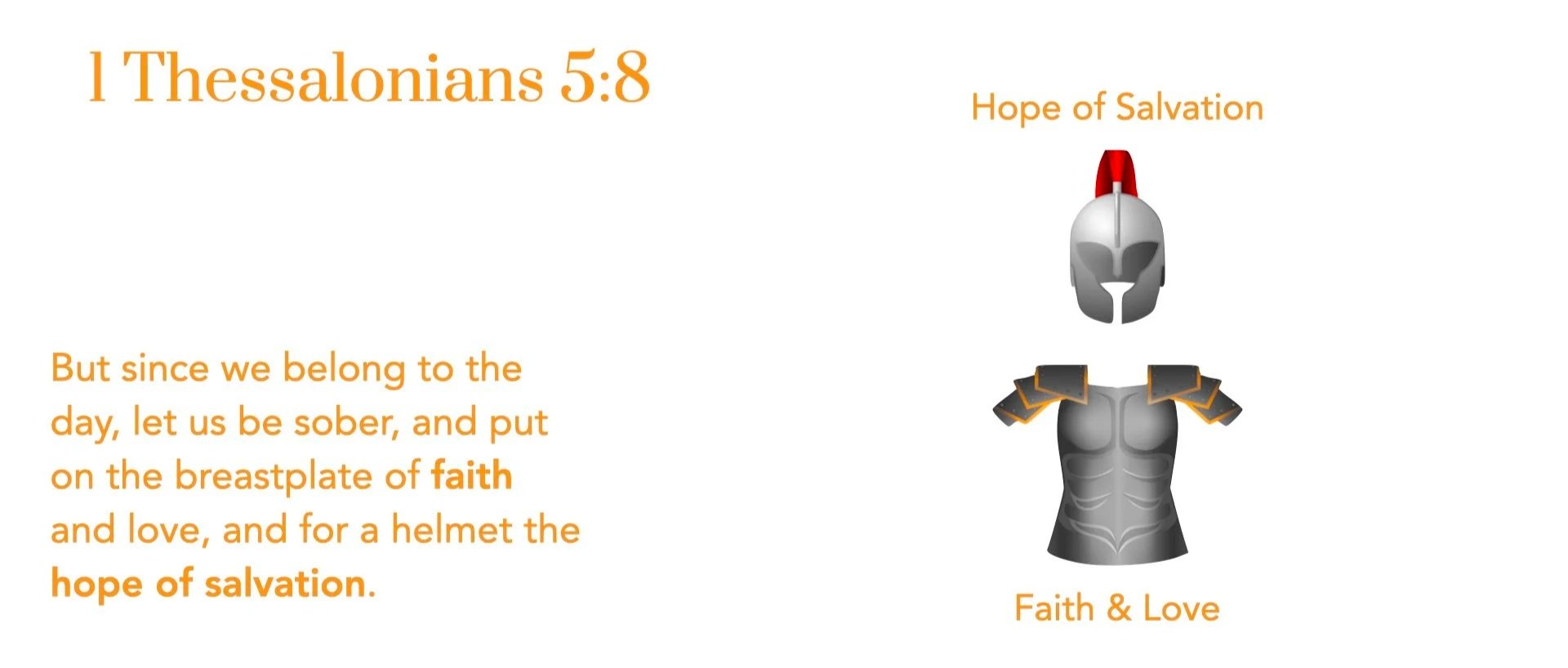
Then comes Paul. Or someone writing as Paul — the authorship of Ephesians is disputed, which itself is interesting for what it tells us about the armor passage. The undisputed Paul, writing to the Thessalonians in what's likely the earliest New Testament text, soft-pedals the whole metaphor: "put on the breastplate of faith and love, and for a helmet the hope of salvation" (1 Thess. 5:8). That's it. No belt, no shield, no shoes, no sword. Just a breastplate and a helmet, and the breastplate is made of faith and love rather than righteousness. This is a God dressed for endurance, not engagement.
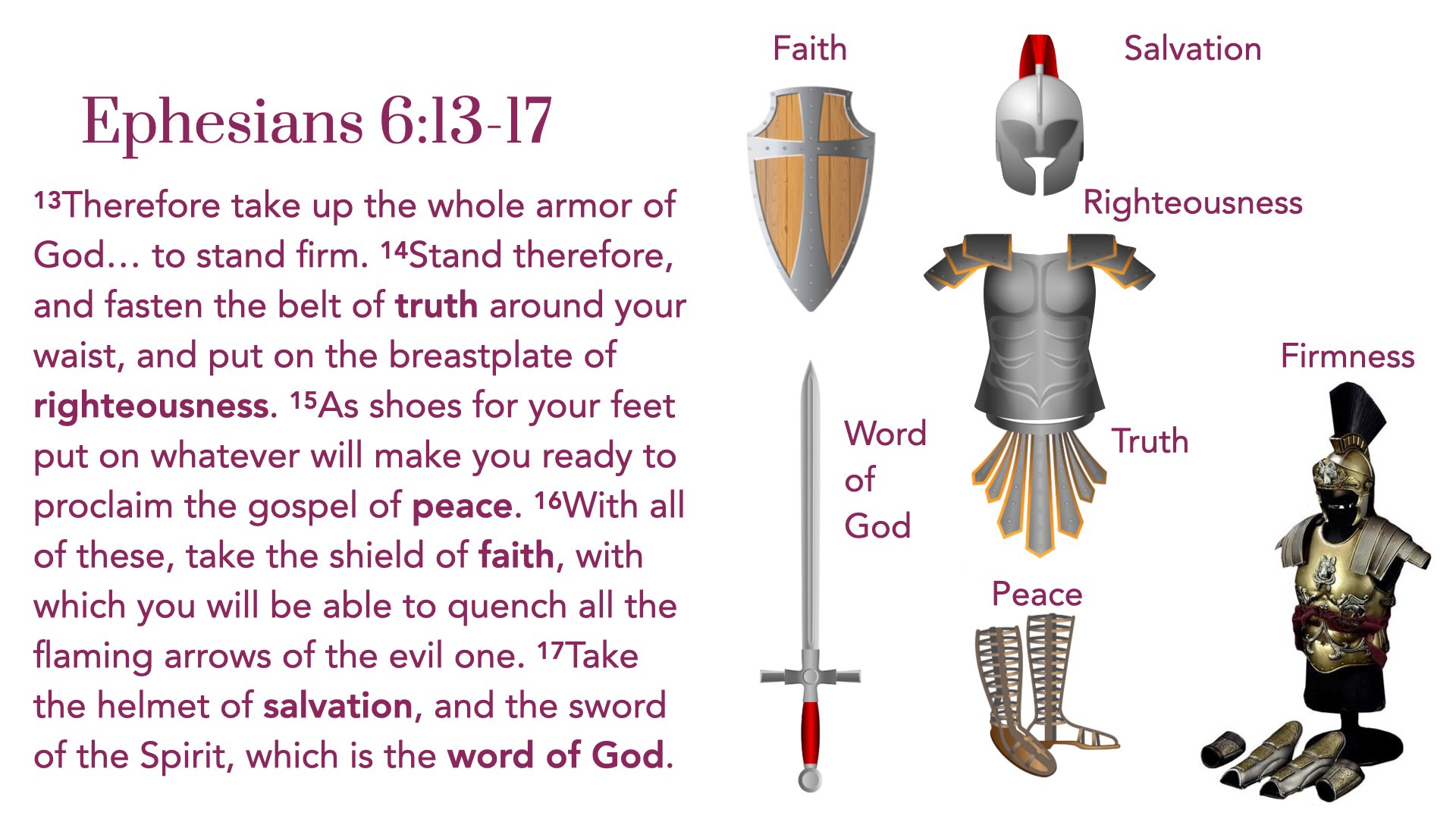
Ephesians 6 brings the full kit: belt of truth, breastplate of righteousness, shoes of peace, shield of faith, helmet of salvation, sword of the Spirit. It's the version most Christians know, and it's the most complete — but also the most explicitly defensive. The only offensive weapon is "the word of God," and those shoes aren't for marching to war. They're for proclaiming peace.
Then John has his say in Revelation 19, and it's a rebuttal. Where Paul gave Jesus peacenik sandals, John puts Jesus' feet to work "tread[ing] the winepress of the fury of the wrath of God the Almighty" (Rev. 19:15). The wrathful sword from Wisdom and the furious mantle from Isaiah come roaring back. John is not interested in Paul's conciliatory vision.
What explains the differences? Context. Paul spent years in Roman custody, guarded by soldiers who became, whether they liked it or not, his conversation partners. He saw their gear up close and borrowed it for his metaphor, but he deliberately cooled the temperature. Paul had personal relationships with soldiers. John, writing in exile after the destruction of the temple, had a chip on his shoulder the size of Jerusalem.
But here's what every version agrees on: the gear is predominantly defensive. Breastplates, helmets, shields — protection, not projection. Even when a sword appears, it comes from God's mouth, not his hand. The mission this gear describes is holding ground, bearing witness, enduring. It's the mission of a grunt on post, not an operator on a raid.

Your CIF issues what you need for your mission. Look at what God issues. That tells you what kind of fight this is.
This post condenses a textual comparison revised out of the second edition of God Is a Grunt. The book version emphasizes the pastoral takeaway; the side-by-side analysis lives here.