GruntGod 2.3.3: To Serve and Protect
The Hebrew Behind Humanity's Mission
This post draws on exegetical material from my revised chapter on Joshua for the second edition of God Is a Grunt.
In 1955, the Los Angeles Police Department adopted "To Protect and to Serve" as the motto for their training academy. It quickly became synonymous with law enforcement nationwide, appearing on squad cars and department insignia from coast to coast.
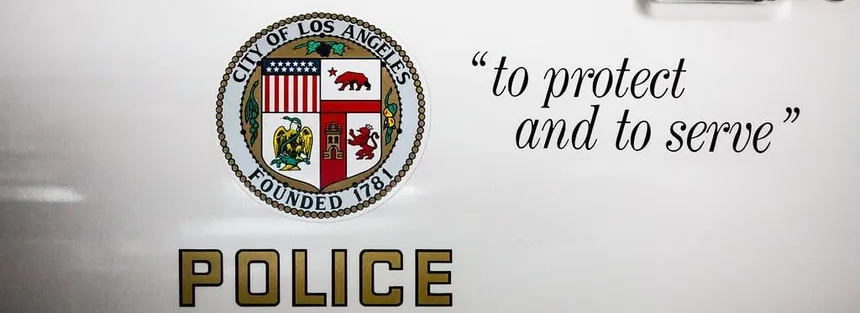
Propaganda: the deliberate dissemination of information to influence public opinion.
But this isn't a 20th-century innovation. It's a restoration—or at least an echo—of humanity's primordial vocation.
The Hebrew phrase in Genesis 2:15 that describes humanity's relationship to creation is āḇaḏ (H5647) and šāmar (H8104). English translations usually render this as "to till it and keep it" or "to work it and take care of it." These are fine translations, but they obscure the connection to contemporary police work—and to military service.
A more literal translation: "to serve and protect."
Āḇaḏ: To Serve
Āḇaḏ appears over 300 times in the Hebrew Bible. It's most commonly translated "to serve," "to work," or "to labor." The word carries connotations of subordination—serving a master, working for someone else, laboring under another's authority.
This matters because when God assigns humanity āḇaḏ as our relationship to creation, we're not being given "dominion" in the sense of domination. We're being given a service assignment. We work for creation, under God's authority, as its custodians and caretakers.
The Greek translation of Genesis 2:15 renders āḇaḏ as ergazomai (G2038)—to work, to labor, to be employed. Same basic idea: active service on behalf of something or someone else.
Šāmar: To Protect
Šāmar is equally instructive. It appears over 450 times in the Hebrew Bible and means "to keep," "to guard," "to watch over," "to preserve." It's the word used for guards standing watch, for shepherds protecting their flocks, for sentries maintaining their posts.
The Greek translation uses phylasso (G5442), which gives us the English word "prophylactic"—something that guards against harm. The noun form, phylax (G5441), means "guard" or "sentinel." And here's where it gets interesting: phylax is the root of phalanx, the Greek military formation.
When Cain asks "Am I my brother's keeper?" (Gen. 4:9), the Hebrew word is šāmar. His question isn't neutral. It's a rejection of the fundamental human responsibility established in Genesis 2:15. Cain is asking, "Do I have to guard my brother? Do I have to watch over him? Am I responsible for his protection?"
The answer, of course, is yes. That's precisely what humans, especially older siblings, are supposed to do.
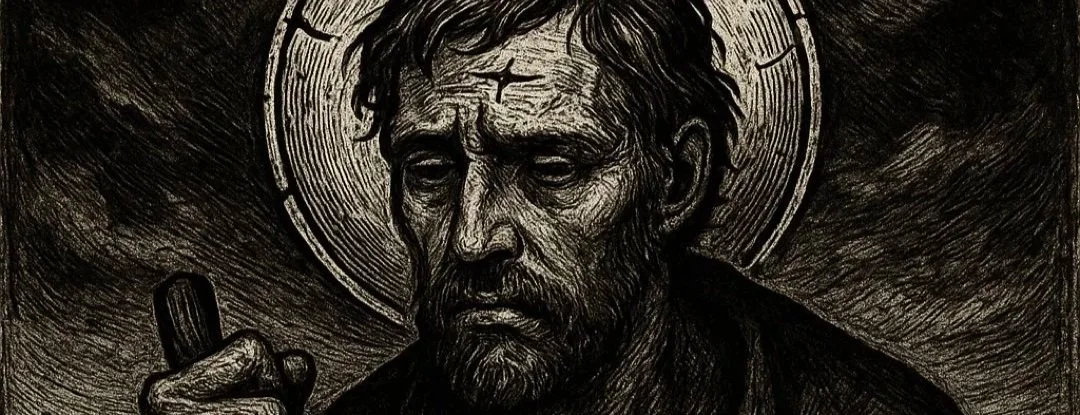
Does Cain look like he's proud of what he's done? That's bc he's not supposed to be.
Dominion Reconsidered
This reframes how we understand humanity's "dominion" over creation (Gen. 1:26, 28). The Greek word is archō (G757), which means "first" or "original." That's odd, because according to the Genesis narrative, humans are created last. As the family of creation, we're the babies, the youngest sibling.
Being given archō status means that even though we're the youngest, we're expected to be the grown-ups in the room. We're the archetypes—the examples of how all creatures should be. Not because we're strongest or most powerful, but because we're responsible for maintaining order.
Some translations render archō as "to rule," which suggests authority and command. But "ruler" has a double meaning. Rulers aren't only inflated egos with bejeweled 👑 crowns. They're also the things we count on for drawing straight lines and measuring out distances. A 📏 ruler is a standard, a reference point, a tool for maintaining order and proportion.
That's humanity's calling. Not to lord it over creation by barking orders, but to carefully tend creation as its janitors. If the earth is in our custody, we have a higher responsibility for protecting and maintaining the order God blessed it with. Not from the top down, but from the bottom up.
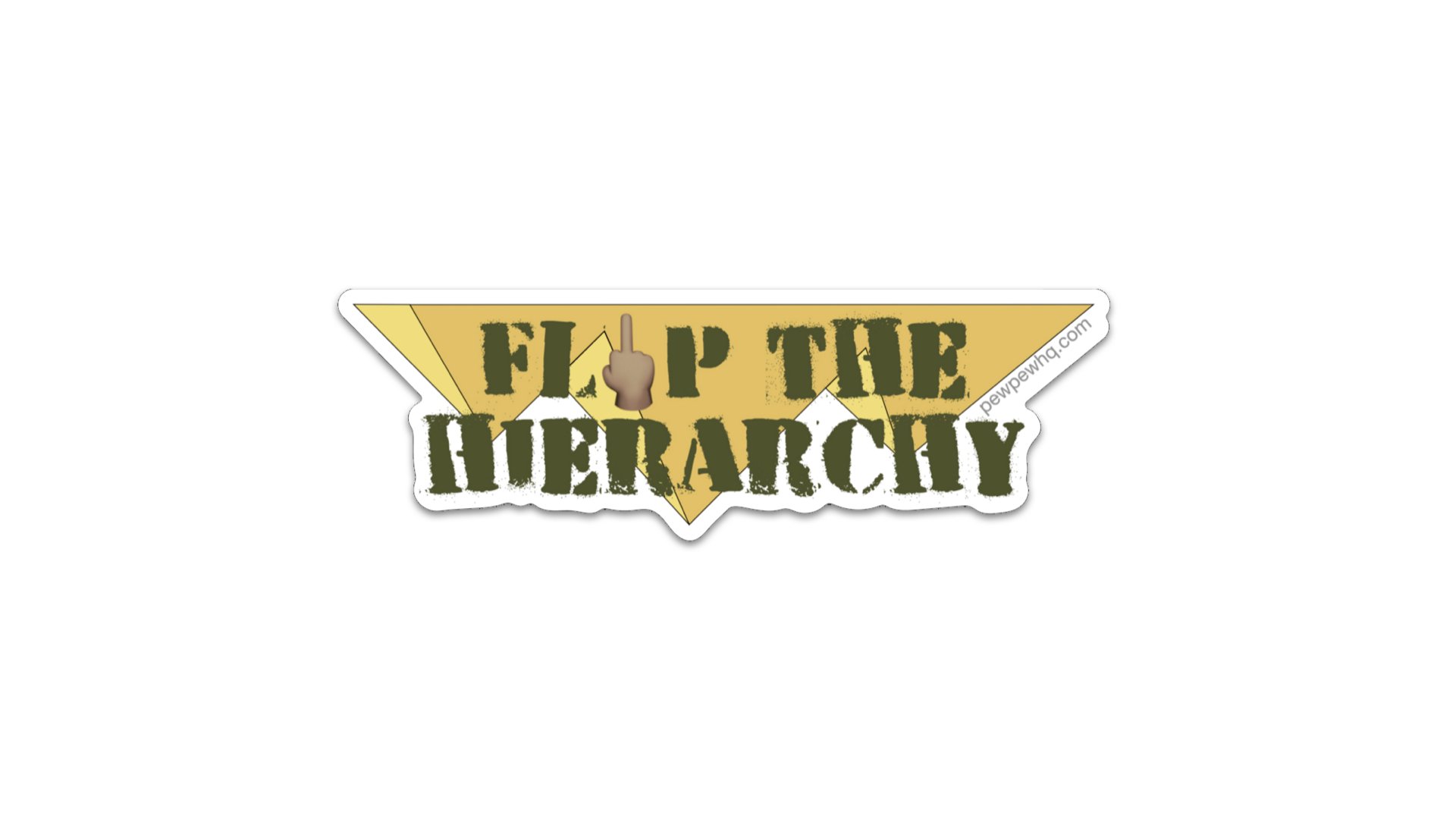
When the brass gets too comfortable and forgets who they're supposed to serve, slap this bad boy on your kit and remind everyone that real leadership flows from the bottom up. Built tough with military-grade vinyl that won't fade, peel, or quit on you—just like the values that actually matter. Perfect for lockers, vehicles, or anywhere you need to broadcast that respect is earned, not appointed.
If humans "rule" creation, it's not because we wield swords and shields. It's because we're given gardening shears and a toilet plunger.
Soldiers as Microcosm
This brings us back to Joshua and the nature of military service. Soldiers are a microcosm of humanity. Militaries are to human communities what humanity is to all creation. We cannot understand the function (and corruption) of militaries in the world apart from the function of humanity in creation.
Flex or fail, the relationship is the same; both exist to maintain order. Both serve from a position of responsibility, not superiority. Both are accountable for protecting what's been entrusted to their care.
When police officers adopt "To Protect and to Serve" as their motto, they're claiming—whether they know it or not—the mandate given to all humanity in Genesis 2:15. And when they betray that motto by brutalizing people in their custody, they're not just violating professional ethics. They're failing at the most basic human responsibility: being the šāmar their privilege calls them to be.
The same applies to soldiers. When one soldier violates rules of engagement, when one unit covers up a war crime, when one service branch stonewalls accountability—the whole community becomes morally polluted. Not because civilians are too sensitive or because the media is unfair. But because that's how God designed it to work from the beginning. Both guilt and glory are contagious, they spread by association. Not everyone will get sick, but we're all carriers of the moral substance our community embodies.
We're all in this together. The phylax principle applies to everyone. Soldiers and civilians. Police and protesters. We are one another's keepers, one another's guards, one another's protectors.
The Question We Can't Dodge
Cain tried to dodge the question. "Am I someone's šāmar?" He knew the answer. He just didn't want to admit it.
We're still trying to dodge. When cops brutalize someone in custody, we say "That's one bad apple" and pretend the rest of the barrel is fine. When soldiers violate ROE, we say "Keep it in perspective" and minimize the moral damage. When institutional corruption gets exposed, we say "Don't judge the whole organization by one mistake."
But Genesis 2:15 won't let us compartmentalize. Neither will Joshua 6:18, where one soldier's theft makes the whole camp liable for destruction. Neither will the etymology of phylax, which connects individual guardianship to collective military formation.
We are our brother's keeper. All of us. From meter maids to the Joint Chiefs of Staff. From infantry grunts to civilian neighbors. The āḇaḏ and šāmar mandate applies to everyone.