GruntGod 2.14.4: The Hate Crime Law Nobody Enforces
In 2009, Congress passed the Matthew Shepard and James Byrd Jr. Hate Crimes Prevention Act (HCPA), best known for extending federal hate-crimes protection based on sexual orientation and gender identity. Section 4712 of that same act, known as The Soldiers Amendment, did something almost nobody talks about: it extended federal hate-crimes protection to soldiers and their immediate families, for up to five years after discharge, specifically because of their military service. That provision was codified into law as 18 US Code Section 1389.
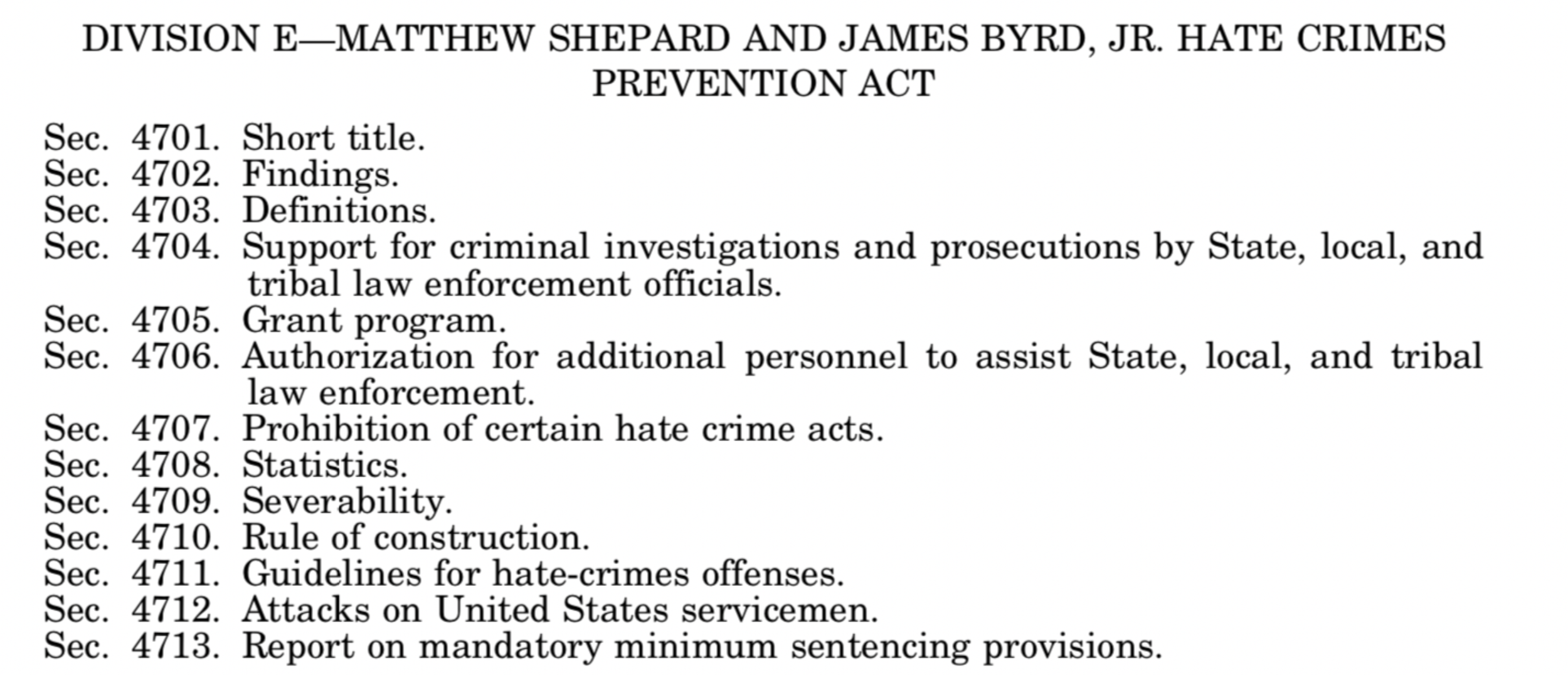
This law exists. It has real cases behind it. Lieutenant Colonel Ira Phillips received a voicemail threat to “blow your fucking brains out” explicitly because of who he took orders from. A military family in Ohio was, according to a federal sentencing memorandum, “targeted for murder at home solely on account of service to our country.” Section 1389 was written for exactly these situations.
Here's the problem. The Department of Justice's own websites show nothing about this specific protection and offer military families no clear channel to report a hate crime under it. The United States Commission on Civil Rights published a decennial report specifically on the Hate Crimes Prevention Act and its enforcement and made no mention of Section 4712 or 18 USC 1389 anywhere in it. When I raised this directly with USCCR staff, including the commission chair, the spokesperson, and the general counsel (whose own spouse is a veteran) the reception was not warm. When I called the Department of Justice and several of its regional offices directly, the agents I reached had no knowledge that the provision existed or how it would be enforced if invoked.

This is not a case of a bad law. VEVRAA is a bad law — the courts themselves have said its language leaves nothing to enforce. Section 1389 is a good law that the agencies responsible for it appear to have simply forgotten exists. That's a different, and in some ways more damning, failure: it's not that Congress wrote something toothless, it's that the executive branch built no infrastructure to use the teeth it was given.
I think this matters theologically as much as legally. A protection that exists on the books but nowhere in practice is a kind of institutional bearing of false witness. The government tells military families, on paper, “we see you and we'll protect you,” while doing nothing to make that true. If your theology of justice only asks whether the right law got passed, you'll miss this entirely. The law passed. Passing it wasn't enough.
More detail and updated documentation on this specific provision, including how to actually attempt to report a violation, lives at gijustice.com, where I try to keep this kind of thing current rather than let it go stale in a book that only gets updated every few years.