GruntGod 2.14.1: The Blinding of Isaac Woodard
This is drawn from the revision of the Ralph chapter in the second edition of God Is a Grunt.
On February 12, 1946, hours before his honorable discharge from the Army, a technicality that legally took effect at midnight, Sergeant Isaac Woodard was blinded by a South Carolina sheriff. An all-White jury acquitted the sheriff. The federal government had jurisdiction to prosecute because of that midnight technicality: Woodard was, on paper, still a soldier when he was attacked.
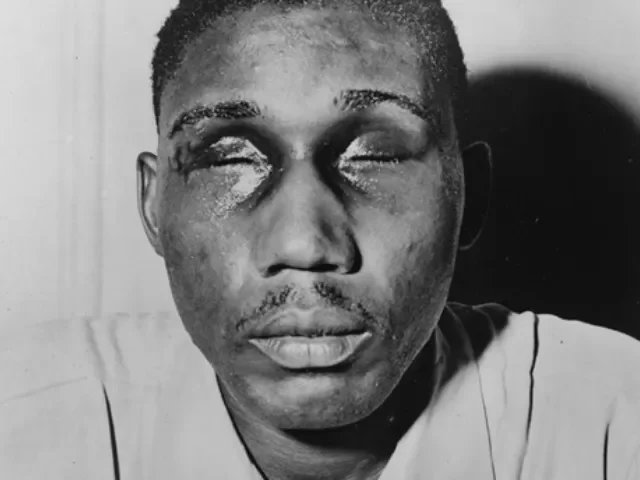
President Truman ordered his Attorney General to investigate and indict. When the jury let the sheriff walk anyway, Truman didn't let it drop. He issued Executive Order 9808, creating a presidential commission on civil rights. That commission's 1947 report, “To Secure These Rights,” called for the postwar military to integrate by July 26, 1948 — which Truman then ordered directly through Executive Order 9981. This was seven years before Brown v. Board of Education.
A few weeks before that report was published, Truman became the first sitting president to address the NAACP. He called for “equality of opportunity,” a phrase that wasn't just applause-line rhetoric. Kennedy borrowed it word for word in Executive Order 10925 in 1961, and Congress codified it into statute three years later as Title VII of the Civil Rights Act of 1964, the same act Martin Luther King and Ralph Abernathy spent years organizing to get passed.
The modern American civil rights enforcement framework (the one we associate, correctly, with lunch counters and marches and Martin's letters from Birmingham jail) has a direct, traceable, and largely unremarked lineage to a military justice case. Not a courtroom drama about a bus seat. A blinded soldier, a technicality about the exact minute his discharge took effect, and a president who happened to be a WWI (fellow) redleg officer himself and took it personally. A true man.
I don't say this to diminish the civil rights movement's civilian history, which doesn't need my help and stands on its own. I say it because it reframes a question a lot of well-meaning civilians ask me: why should military families get their own civil rights conversation, separate from everyone else's? The honest answer is that they already had one, first, and it's the one everything else grew out of. Somewhere between 1948 and now, the tree kept the fruit and forgot the root.
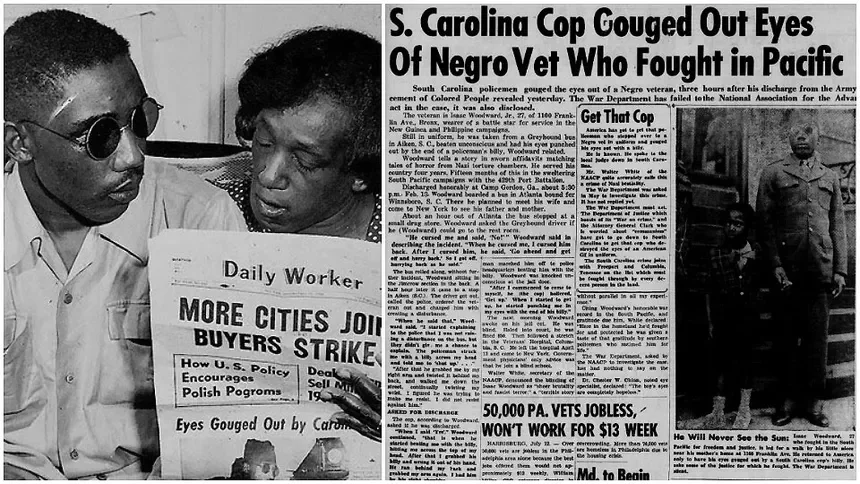
It also explains something that bothers me every time I read Woodard's story next to my DOL complaint: the same federal government that once treated an attack on a recently discharged soldier as a national moral emergency worth a presidential commission now can't find the paperwork to answer a phone call about a law Congress passed specifically to protect veterans from employment discrimination. The infrastructure for taking military-family civil rights seriously already exists. It was built once, on purpose, by a president who'd worn the uniform. What happened to it is worth its own investigation — which is basically Chapter 2.14 in miniature.