GruntGod 2.12.2: The Word We Translated Into Meaninglessness
On Leitourgia
This is drawn from the revision of the Ignatius chapter in the second edition of God Is a Grunt.
Second post pulled from the Ignatius chapter revisions for God Is a Grunt — same chapter, different cut. Last time I laid out the Jewish prayer clock behind Christian daily prayer. This time I want to sit with a single Greek word the English Bible has quietly ruined for most readers: leitourgia.
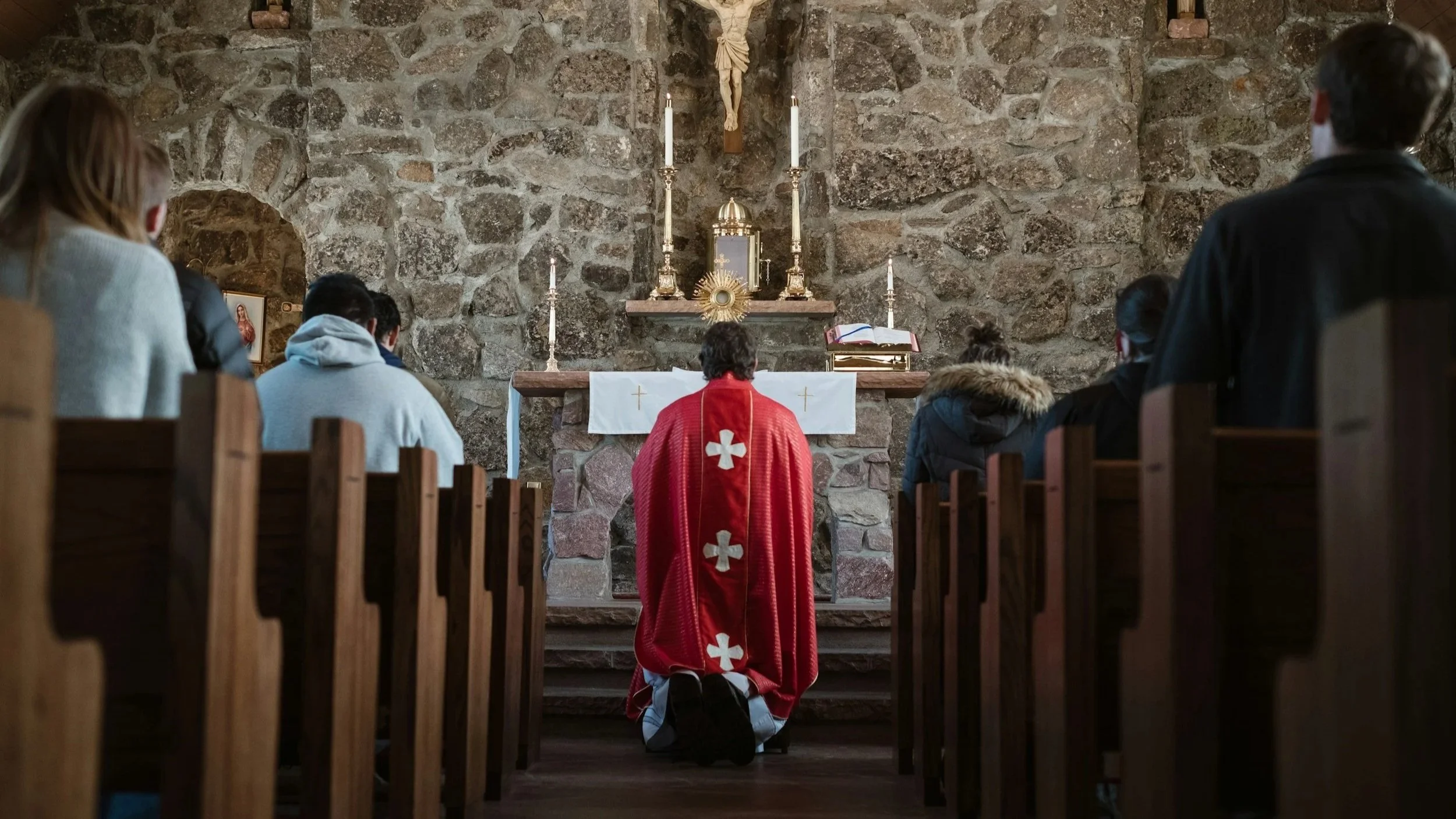
You know it as "liturgy." If you grew up low-church or nondenominational the way I did, you probably know it as a word for other people's church — smells and bells, vestments, the stuff "we" don't do because "we" worship from the heart instead of a script. That distinction is not in the Greek. It's not even close.
Leitourgia (G3009) meant public service, full stop — any labor performed on behalf of the community, sacred or civic. It's the word for a magistrate doing his job. It's the word for a soldier's duty. And in Luke's Gospel, it's the word used for Zechariah's work as a priest: "when his time of leitourgia was ended, he went to his home" (1:23). Not a special mystical episode. A shift. Zechariah clocks in, does his priestly duty in the Temple rotation, clocks out, goes home. The word doesn't distinguish between what he's doing and what a soldier does when he reports for duty. Liturgy, biblically, is not the opposite of ordinary service — it is ordinary service, aimed at God instead of Caesar.
This matters because it exposes something about how modern Christians (especially, I'd argue, evangelical and low-church traditions that pride themselves on rejecting "empty ritual") have actually inherited a distinction the New Testament doesn't support. We think we're being more authentic by avoiding liturgy. But the word never meant performance versus sincerity. It meant service versus self-interest. The opposite of leitourgia was never spontaneity. It was shirking.
Which brings me to the word Christ uses to warn against faking that service: hypokritēs (G5273). Everyone knows this one — "hypocrite" — but the Greek is more specific and more visual than the English has room for. A hupokrites was originally a stage actor,someone speaking from behind a mask. Joshua+ isn't warning his followers about people who hold wrong beliefs. He's warning them about people performing the correct beliefs for an audience while having no intention of living them out once the curtain drops. In Matthew's telling, right before he hands his followers a template for prayer (the Lord's Prayer), Christ takes a full paragraph to make sure they understand: don't be the actor. Don't let your leitourgia become a leitourgia in the theatrical sense, a δρᾶμα (dráōmă), a performance for other people's benefit instead of an actual public service rendered to God.
I used a term in the book for this figure that I think does more work than "hypocrite" ever will for a military reader: Blue Falcon. Every unit has one — the guy who talks the biggest game about loyalty and covering his battle buddies, right up until it costs him something. Joshua+ is describing a spiritual Blue Falcon two thousand years before the term existed: someone whose public performance of faithfulness evaporates the second it demands actual sacrifice rather than actual applause.

Here's where I'll push the argument further than the book chapter has room for. If leitourgia really means "public service" without a sacred/secular divide, then the modern conversation among liturgical scholars about "high church" versus "low church" worship styles is arguing about something the text never asked us to argue about. The question was never whether your service to God looks formal or informal, scripted or spontaneous. The question was always whether it's actually service — whether it costs you something and continues past the point where anyone's watching — or whether it's performative. A silent monastic office performed with genuine self-forgetfulness is leitourgia. A rousing, unscripted worship set performed to be seen performing it is hypokrisēs, however loud the "amen"s get.
Abraham Heschel put words to the physical, embodied version of this that I think closes the loop better than any Greek word study can. After marching from Selma to Montgomery with Martin Luther King Jr., someone asked him whether he'd found time to pray in Alabama. His answer, as his daughter remembered it: "Legs are not lips, and walking is not kneeling. And yet our legs uttered songs. Even without words, our march was worship. I felt my legs were praying."
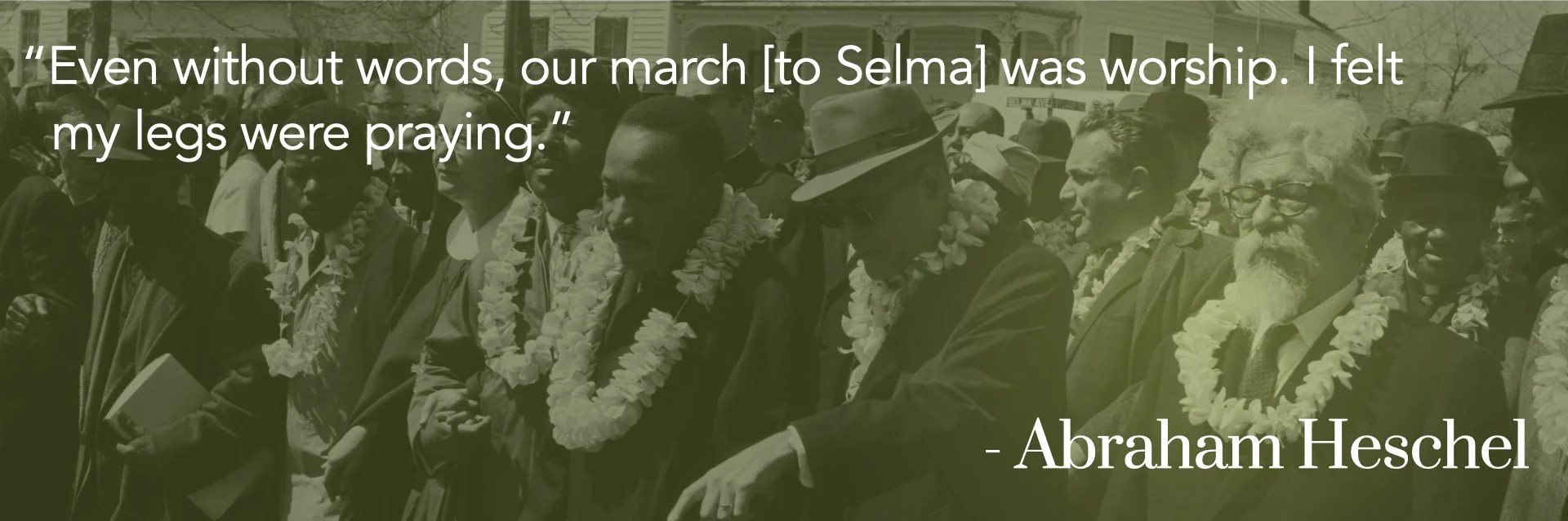
From left to right are John Lewis, an unidentified nun, Ralph Abernathy, Martin Luther King, an unidentified marcher, and Abraham Joshua Heschel.
That's leitourgia. Public, costly, unglamorous, aimed outward. Not a style of worship. A posture toward the whole of your life. Ignatius of Loyola would go on to build an entire training system around recovering exactly that posture — which is where this series is headed next.