GruntGod 2.12.1: Praying by the Clock
The Lost Jewish Rhythm Behind Christian Prayer
This is drawn from the revision of the Ignatius chapter in the second edition of God Is a Grunt.
I'm knee-deep in revisions on the Ignatius chapter for the second edition of God Is a Grunt right now, and I had to cut something I didn't want to cut. The military-family cut of that chapter needs to move; a full derivation of first-century Jewish prayer times reads like a seminar, not a story about a guy who almost lost his leg at Pamplona. But the argument underneath it is too good to lose, so you're getting it here instead.
Here's the claim: daily prayer in the Christian tradition didn't start with monks. It started as a schedule, and the schedule is older than the church.
Start with the calendar itself. The Jewish day doesn't begin at midnight the way ours does — it begins at sunset, because in Genesis, time itself starts in darkness ("there was evening and there was morning"). From there you get four night Watches of three hours each, then daylight Hours counted from dawn. A Jewish soldier and a Roman one would have kept radically different clocks even standing in the same formation.
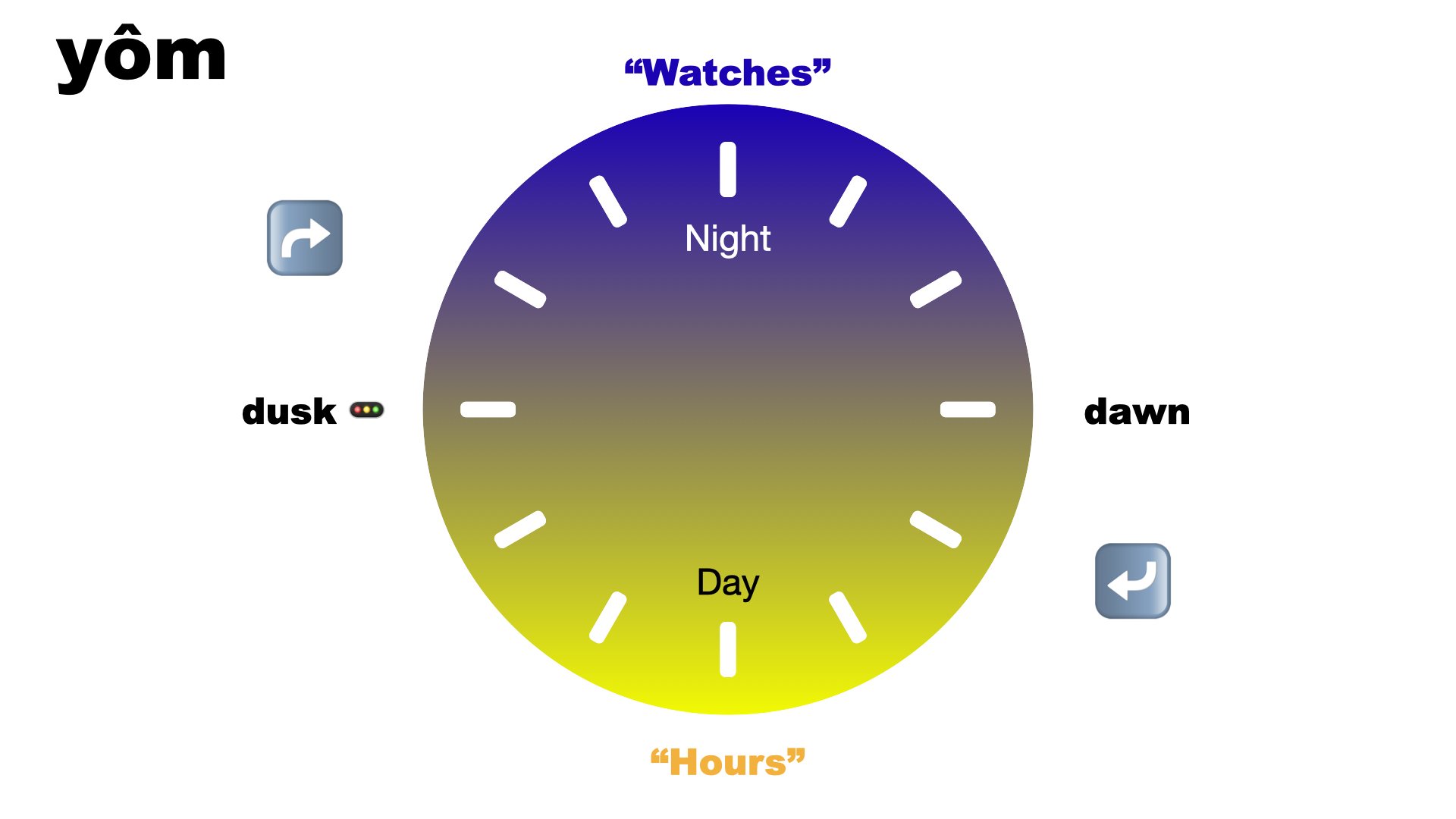
Out of that calendar came three fixed prayer times: shacharit, mincha, and maariv. Shacharit ran from dawn — sahar (H7837) — to noon, timed to when the Temple gates opened. Maariv ushered in the night, erev (H6150), around the twelfth Hour, roughly our 1800. But the center of gravity was mincha, the afternoon prayer, because mincha (H4503) is also the word for the grain and animal offering brought to the Temple every day between the sixth and ninth Hours. Prayer and lunch were the same event. Nobody was drawing a line between "religious observance" and "getting fed," because there wasn't one to draw.
That word, mincha, shows up earlier than you'd expect. In Genesis 4, both Cain's and Abel's offerings to God are called mincha (4:3–5) — which means the very first act of worship in scripture is already keyed to this same daily rhythm, long before there's a Temple to bring it to. Fast-forward to the Gospels: "when it was noon, darkness came over the whole land until three in the afternoon" (Mark 15:33). Christ dies on the cross at the ninth Hour — the exact close of the mincha window, the moment the daily offering would have concluded. He isn't dying at a random hour. He's dying at the Hour scripture had already trained its readers to associate with sacrifice. He is God's mincha to humanity, which is not incidentally why we eat him at Communion.
The rhythm doesn't stop at the cross, either. In Acts 3:1, Peter and John are on their way to the Temple "at the hour of prayer" — proseuche (G4335) — which the text specifies is the ninth hour. Same clock. In Acts 10, Cornelius the centurion has his vision at "about the ninth hour" (10:3), and Peter has his own vision at "about noon" a few verses later (10:9). Two Gentiles, one of them a Roman military officer, are shown having genuine encounters with God on a schedule inherited from a religion that isn't theirs — timed by a clock the early church hadn't abandoned even as it was working out who got to be part of it.
Here's why this matters for the book's larger argument, not just as biblical trivia: prayer, in this frame, was never a private, internal event you could complete by feeling the right thing at your desk. It was a public, embodied, scheduled act tied to a specific place and a specific hour, done whether you felt like it or not — the same way First Formation doesn't check whether you're in the mood before it starts. The habit came first. The meaning came from showing up to the habit, not the other way around.
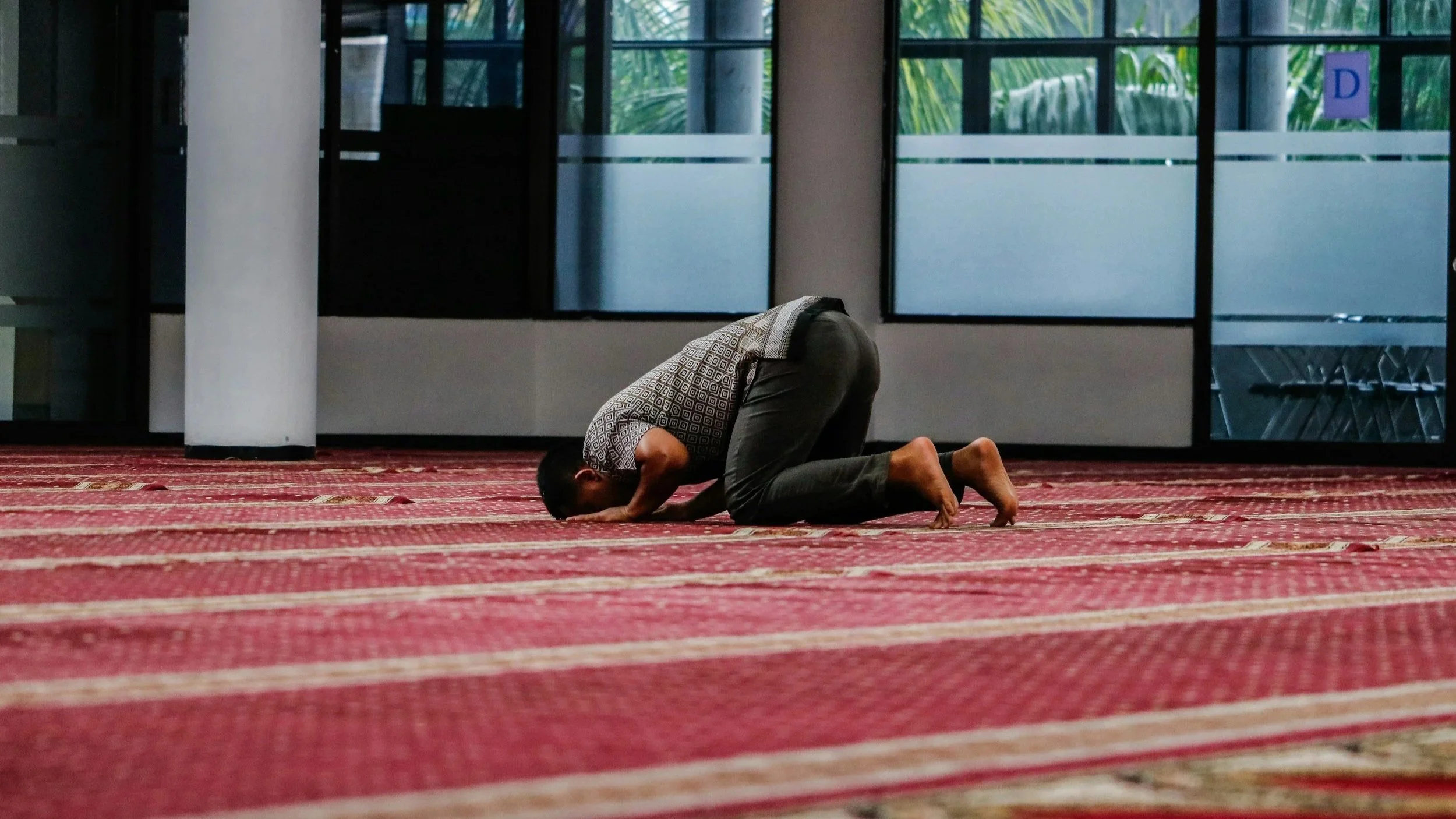
Modern Christians — and I mean this as someone who spent years assuming morning devotionals were a nice-to-have rather than a discipline — have largely lost the clock part of prayer. We kept the words and dropped the schedule. The early church, and the Judaism it grew out of, would not have recognized prayer without a fixed hour attached to it. If you want a starting place for reclaiming that, it's not a new app or a new routine. It's just: pick an hour. Show up to it. Every day. Whether you feel like it or not.
That's the discipline Ignatius of Loyola would eventually rebuild almost from scratch, five hundred years after the Temple that gave us mincha was already rubble. More on him in the next post.