GruntGod 2.10.4: Why Christ Had to Carry His Own Cross
This is drawn from the revision of the Francis chapter in the second edition of God Is a Grunt.
Matthew, Mark, and Luke all agree on a detail that should be more famous than it is: Simon of Cyrene, a bystander, carries Christ's cross to Golgotha (Matt. 27:32; Mark 15:21; Luke 23:26). All three Synoptic Gospels report it the same way, without comment, as if it's unremarkable. It should be remarkable. Standard Roman crucifixion procedure had the condemned man carry the crossbeam himself as part of the public spectacle of the death march — the humiliation was the point. A bystander getting conscripted to carry it instead is either an unusual mercy or an administrative accident, and either way, three independent Gospel traditions preserve it without apparent theological anxiety about what it implies.
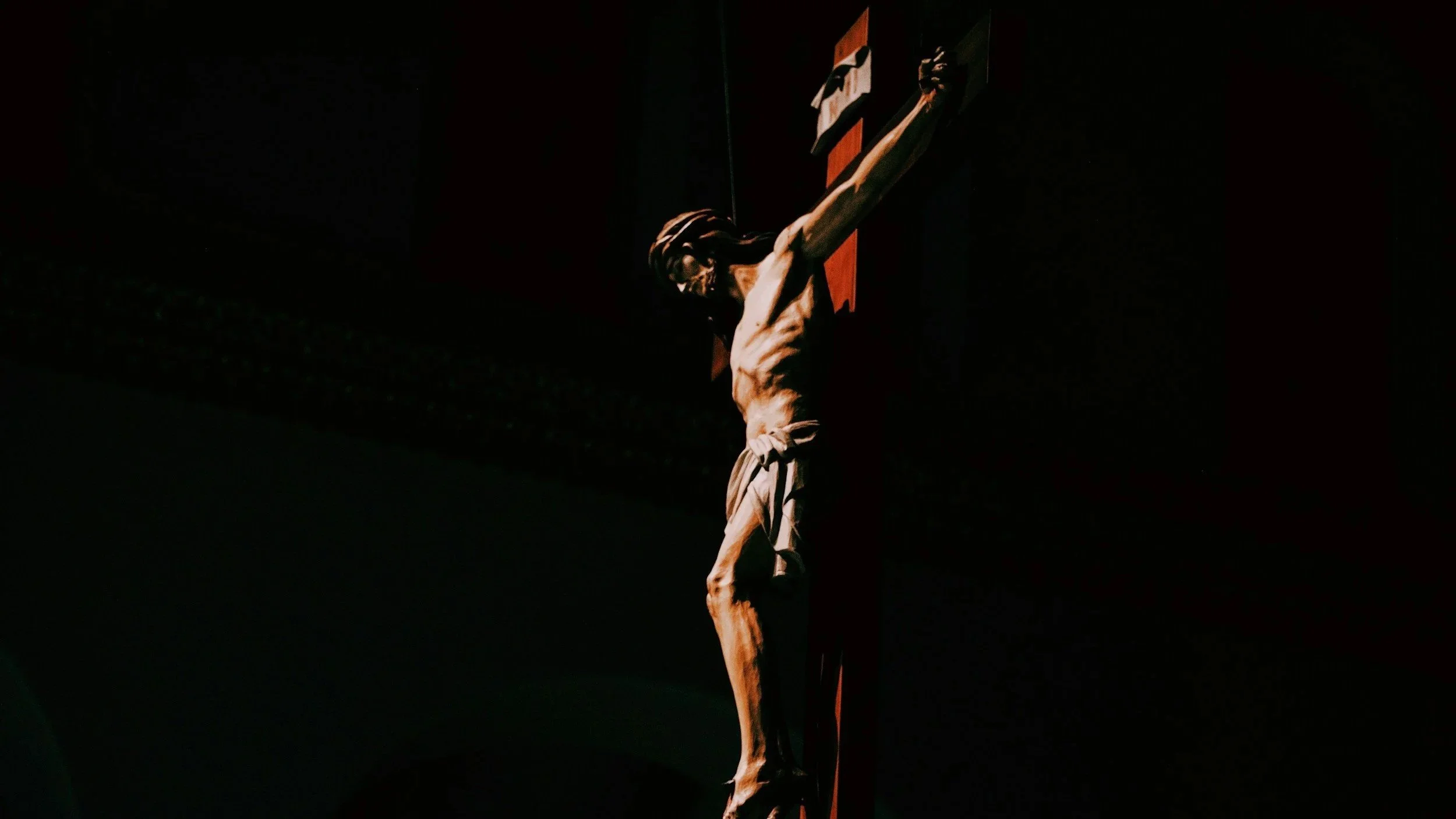
John's gospel breaks from all three. John 19:17 states plainly that Joshua+ went out "bearing his own cross." No Simon. No conscription. Scholarly consensus holds that John's gospel was composed last of the four, likely with access to the Synoptic tradition or something very like it — which makes this divergence a choice, not an oversight. John knew the Simon tradition, or something functionally identical to it, and revised it anyway.
Why would a later gospel writer change a detail everyone else agreed on? The standard answer in Johannine scholarship is that John is working from a different set of priorities than the Synoptics, namely theological coherence over strict chronicle. John's gospel consistently emphasizes Christ’s sovereign control over his own passion: he lays down his life, nobody takes it from him (John 10:18); he identifies himself to the arresting soldiers and they fall backward (18:6); he tells Pilate that Pilate would have no authority over him at all if it hadn't been given from above (19:11). A Jesus who needs a bystander to finish carrying his execution device doesn't fit that Christology. So John revises the detail to protect the theological claim he's building across the whole book: Joshua+ is not a victim swept along by events. He is in command of his own death from start to finish, including its logistics.
There's a pastoral payoff buried in that redaction-critical point, and it's the one thing I kept in the streamlined chapter without the scholarly scaffolding behind it: if Joshua+ is going to tell his followers, across three separate Synoptic passages, to take up their own cross and follow him — Matthew 16:24, Matthew 19:21, Luke 9:23 — then John's version makes sure Jesus isn't asking for something he dodged himself. A leader who tells his people to carry a load he arranged for someone else to carry is a hypocrite. John's redaction closes that gap before a careful reader can even ask the question. It's not historical reporting so much as it is John doing constructive theology in real time, making sure the invitation to "follow me" survives scrutiny.
Have you seen our Follow Me decal…?
That's the actual argument behind "Come, Hump." Grunt Christology, if you want a name for it: the guy giving the order already carried the ruck himself.