GruntGod 2.10.1: What Circling Has to Do with Following
This is drawn from the revision of the Francis chapter in the second edition of God Is a Grunt.
Three Jewish pilgrimage feasts show up in Deuteronomy 16:16: Passover, Weeks, and Booths. The Hebrew word behind "feast" is hag (H2282). It comes from the verb chagag (H2287) — "to circle" or "to reel." That's not incidental vocabulary. It's written into how you keep the feast. Exodus 12:14 tells Israel to "celebrate [chagag] it as a festival [hag] to the LORD" — the verb and the noun share a root that means going in circles.
Compare that to Joshua 6, where Israel doesn't storm Jericho, they circle it. The verb is cabab (H5437), and it shows up six times in one chapter (6:3, 4, 7, 11, 14, 15). The wall doesn't fall because somebody breaches it. It falls because the people walk around it, over and over, in a liturgical parade. Circling is the tactic. That's worth sitting with if you've ever wondered why God's preferred military strategy in Joshua looks less like an assault and more like a pageant.

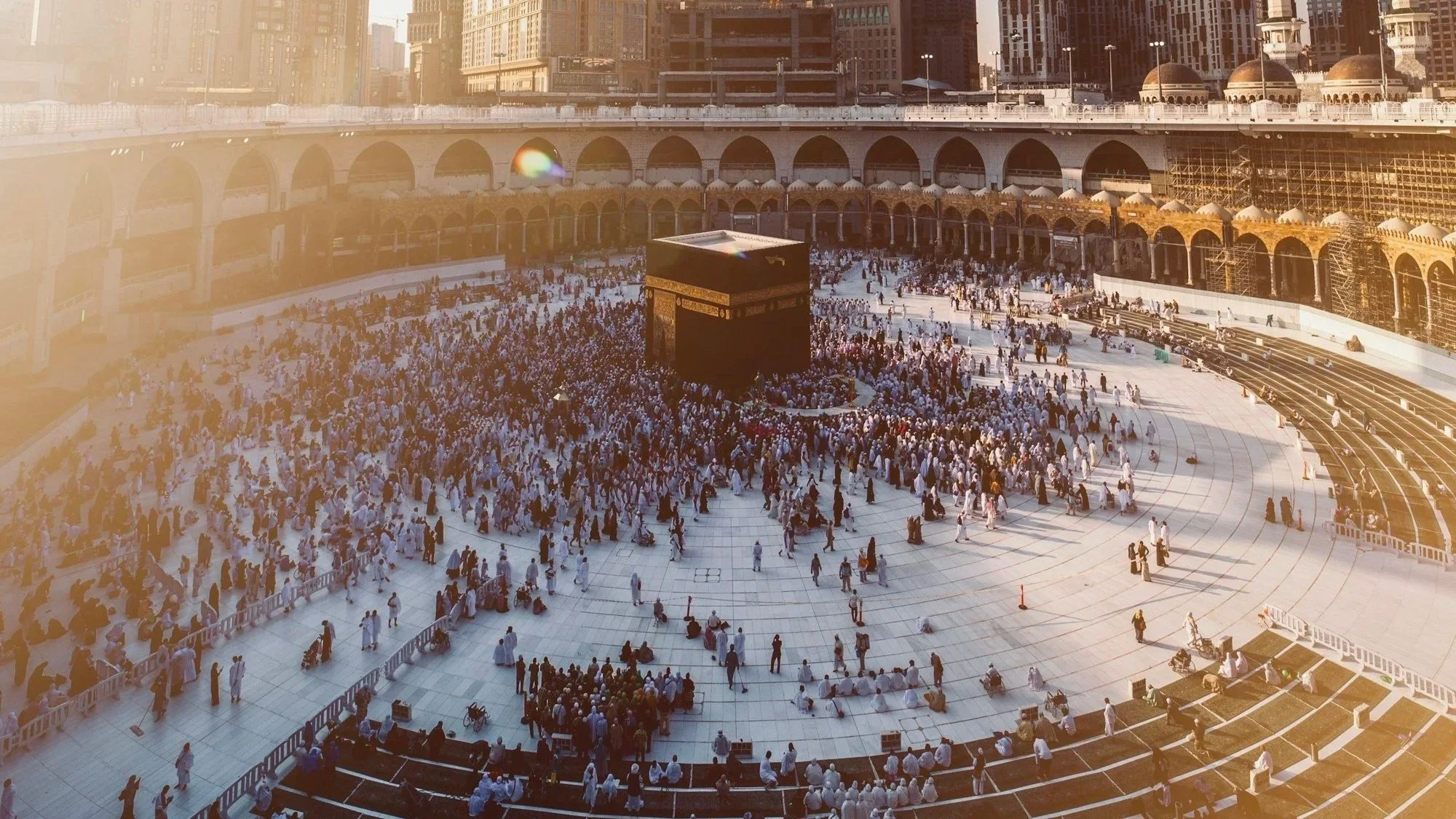
Zoom out further and the same root shows up outside the Hebrew Bible entirely. The Arabic word hajj — the pilgrimage to Mecca — shares the Semitic root with hag. Hajj pilgrims circle the Ka'aba multiple times, wearing seamless white robes, and the ritual physically resembles what's happening conceptually in Deuteronomy and Joshua: movement without a straight line, holiness as an orbit rather than a destination you arrive at and check off.
Here's why I think this matters for a chapter about Francis. The entire crusading project ran on a straight-line logic: Jerusalem is the destination, dying en route earns forgiveness, get there by whatever means. That's a point A to point B model of holiness, and it's the model Urban II weaponized. But the older biblical grammar of pilgrimage isn't a straight line at all. It's a circle. Abram doesn't get a destination when God calls him in Genesis 12:1 — he gets a direction: leave. The text doesn't even name where he's going yet. Circling shows up again and again as the shape of faithful movement, and a circle, notably, cannot be conquered in a single decisive march. You can't crusade your way through a labyrinth.
Luke's version of the "take up your cross" saying adds one word the other Gospels don't have: daily (9:23). Once you've seen the circling pattern in hag and cabab, "daily" reads differently. It's not a straight-line command to endure suffering once, heroically, and be done. It's the same rotational logic as chagag — an obligation that resets and repeats, that you walk again tomorrow the same way you walked it today. Pilgrimage, biblically, was never a single trip with a stamp at the end. It was supposed to be the shape of an ordinary life.
Francis, whether he knew this etymology or not, ended up building something that matches it better than the crusaders' theology did. He never got his straight line to Jerusalem. What he built instead — a nativity scene you could visit every Advent, stations you could walk inside your own parish — was circular by design. Recurring. Local. The kind of pilgrimage you do daily instead of once, gloriously, with a “sword” in your hand.
*Thanks to Jason Burkett for his contribution to this essay.