What TYFYS Really Means
A Grunt's Guide to America's Sacrificial Ritual
If you've spent any time around post-9/11 veterans on social media, you've probably seen the acronym TYFYS. It stands for "Thank You For Your Service"—that phrase civilians repeat so often it's earned its own shorthand. According to a 2019 survey, 90 percent of civilians report saying it, despite nearly half of military veterans reporting discomfort at being thanked.
The question veterans keep asking: Is it "thank you" or "service" that's become meaningless?
I usually give civilians the benefit of the doubt by assuming their words mean something. When thanked for my service, I sometimes reply with "I was in for six years; which part?" or "Oh, you've read about me! Do you want me to sign your copy of Reborn on the Fourth of July?" The confused—and occasionally angry—responses tell you everything you need to know. "Hey, I was just trying to be nice!" they say, revealing who the real beneficiary of this ceremony is. It's not the veteran.
Sacrificial rituals always disclose more about the community that demands sacrifice than they do about those being sacrificed.
The Pharmakoi: Sacrifice in a Nutshell
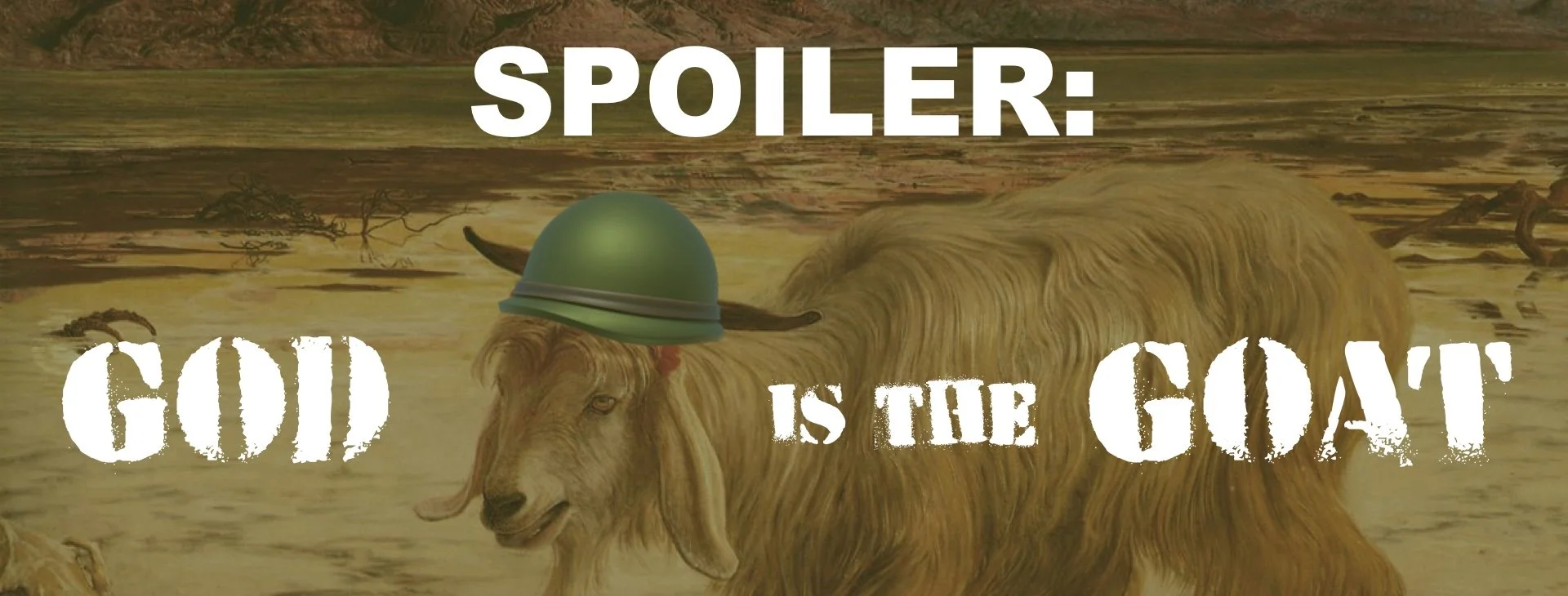
Sacrificial rituals aren't new. Ancient societies performed them to appease the gods and avoid disasters—famine, drought, disease. The Greek scapegoat rituals involved pharmakoi (from pharmakon, meaning "drug or poison"), in which "the elimination of one or two members saves the whole of the community." That's sacrifice in a nutshell: a few suffer so that many may prosper.
Here's the thing about pharmakoi—they were supposed to be the most valuable members of society. Esteemed royalty, wealthy merchants, the beautiful people. But when it came time to actually select someone for abuse and exile, it was always "the poor, the ugly, and criminals" holding the short straw. To fulfill mythical expectations, they'd dress up these bottom-rung folks as "attractive, aristocratic, and royal figures" before the climactic moment when they'd be stripped, beaten, and run out of town.
Sound familiar?
When Good Intentions Become Ritual Silence
Look, I get it. Most people saying TYFYS genuinely mean well. They want to acknowledge something difficult, express gratitude for something they can't fully understand. The sentiment itself isn't the problem.
The problem is what TYFYS has become: a civil-religion ritual that functions to silence the very people it claims to honor. When gratitude becomes obligatory public ceremony, it stops being about listening to veterans and starts being about civilian catharsis. It's a way for society to feel good about itself without actually engaging with the messy realities of what we're asking young people—usually poor young people—to do on our behalf.
I know this is probably a minority position within the military community. Plenty of veterans appreciate the gesture, and I respect that. But I can't ignore what the ritual accomplishes: it completes the sacrifice. The scapegoat gets paraded around on a few national holidays, thanked profusely, then expected to disappear back into the wilderness. Don't make noise. Don't ask for help. Don't complicate the narrative.
Just smile, say "you're welcome," and drive on.
Spiritual Asphyxiation
The military suicide rate isn't just about PTSD or access to mental health services, though those matter enormously. It's also about spiritual asphyxiation—about rituals drained of any real meaning, about being treated as symbols rather than people, about carrying a community's guilt into the wilderness and being expected to stay there.
When you're thanked but not listened to, honored but not understood, paraded but not valued—that's suffocation. TYFYS becomes one more hollow performance in a culture that's forgotten how to breathe life into its own ceremonies. We're going through the motions of sacrifice without any of the redemption that's supposed to make it bearable.
The biblical tradition understood something about scapegoats that we've forgotten: they need a way back. The ritual isn't complete when the goat wanders into the wilderness. The community has to reckon with what they've done, why they needed a scapegoat in the first place, and how to stop repeating the pattern.
TYFYS short-circuits that reckoning. It lets everyone feel like the debt is paid, the ritual complete, the sacrifice acknowledged. Meanwhile, the goats are still out there in the wilderness, wondering if anyone actually gives a damn.
Where to Learn More
I explore this more deeply in Chapter 2 of God is a Grunt, which examines Moses and Levitical sacrifice. The book challenges how military communities can reclaim theological language that's been sanitized by civilian Christianity and recover a God who crosses boundaries rather than policing them.
TYFYS isn't going away. But maybe understanding it as a sacrificial ritual rather than genuine gratitude can help us stop performing the ceremony and start having actual conversations with the people we claim to honor.
Because scapegoats don't have to stay silent. And they sure as hell don't have to stay in the wilderness.