GruntGod 2.7.5: Martyrdom or Suicide?
George's Death and the Lactantius/Eusebius Debate
This is drawn from the revision of the George chapter in the second edition of God Is a Grunt.
The two earliest sources for Saint George are Lactantius and Eusebius — contemporaries, both connected to the Diocletianic world, both Christians, and deeply at odds about what George did and what it means.
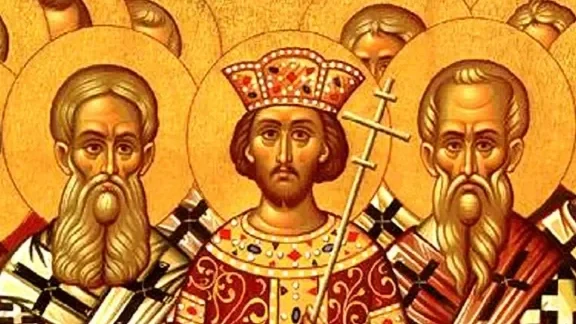
Lactantius was an intellectual inside Diocletian's court who converted to Christianity and resigned his position before the persecutions began. He's writing just a few years after Constantine ended them. His account describes "a certain person" who tore down Diocletian's edict and cut it in pieces. He does not name this person. He calls the act "improperly" conceived. He acknowledges the man's courage and suffering — but he will not venerate him. For Lactantius, a soldier who deliberately provoked the emperor into his own execution isn't a martyr. He's someone who brought discredit on the faith by manufacturing his own death.
Eusebius, writing a decade later, tells the same story with different inflection. His version praises the man's "ardent faith" and "zeal toward God." He emphasizes the man's social standing — "not obscure, but very highly honored with distinguished temporal dignities." Eusebius is making a case for George, not against him.
Neither names him. The most plausible reason is that the act was too theologically controversial to name without taking a side. A name would force the reader to venerate or condemn. Silence let the story circulate without resolution.
When a former Marine Corps gunnery sergeant named Joe Carter accused me in print of having a "lack of interest in life" — for my decision, described in Reborn on the Fourth of July, to lay down my weapon while remaining in uniform — I thought of Lactantius. The accusation carried the same logic: you're inviting your own destruction. You're not being faithful, you're being reckless. You're making others responsible for your choices.
I think Lactantius was wrong about George, for the same reason I think Carter was wrong about me. What Lactantius couldn't see from his position of relative comfort and influence is that sometimes faithfulness requires you to do something you know will cost you everything. George wasn't seeking death. He was refusing to comply with an edict that demanded he dishonor God in exchange for his own survival. The edict was the ultimatum. George's response was the witness.
That's not suicide. That's exactly what a witness does.

The question of whether a given act of resistance is martyrdom or recklessness is never fully resolved in advance. It gets adjudicated in community, over time, in the light of what the witness produced. George's witness produced churches. That's worth something.
For veterans navigating similar questions — when to hold the line, when staying costs everything, what faithfulness looks like when the institution demands something your conscience won't allow — George is not a simple answer. He's a hard conversation partner. And that's exactly why he belongs in this book.