GruntGod 2.6.2: When "Christian" Was a Slur
And the Church Kept It Anyway
This is drawn from the revision of the P(s)aul chapter in the second edition of God Is a Grunt.
The word "Christian" was not coined by followers of Jesus. It was coined by outsiders who meant it as a put-down.
According to Acts 11:26, the first time followers of Joshua+ were called "Christians" was in Antioch—a Greek-speaking city with a well-documented reputation for giving nicknames. The word they used was christianos: a Greek prefix (Christos, "anointed one") combined with a Latin suffix (-ianus), which in Roman usage expressed ownership or allegiance, often in the context of slavery. "Christian" meant roughly "slave of the Annointed."
For Greek-speaking Romans, this was a joke. The Christ in question had been publicly executed by Rome. So the followers of this executed man were calling themselves his slaves? Or rather, outsiders were calling them that—mockingly. Herod Agrippa picks up the term in Acts 26:28, using it to ridicule Paul's missionary pitch. You're trying to make me one of those Christ-slaves?
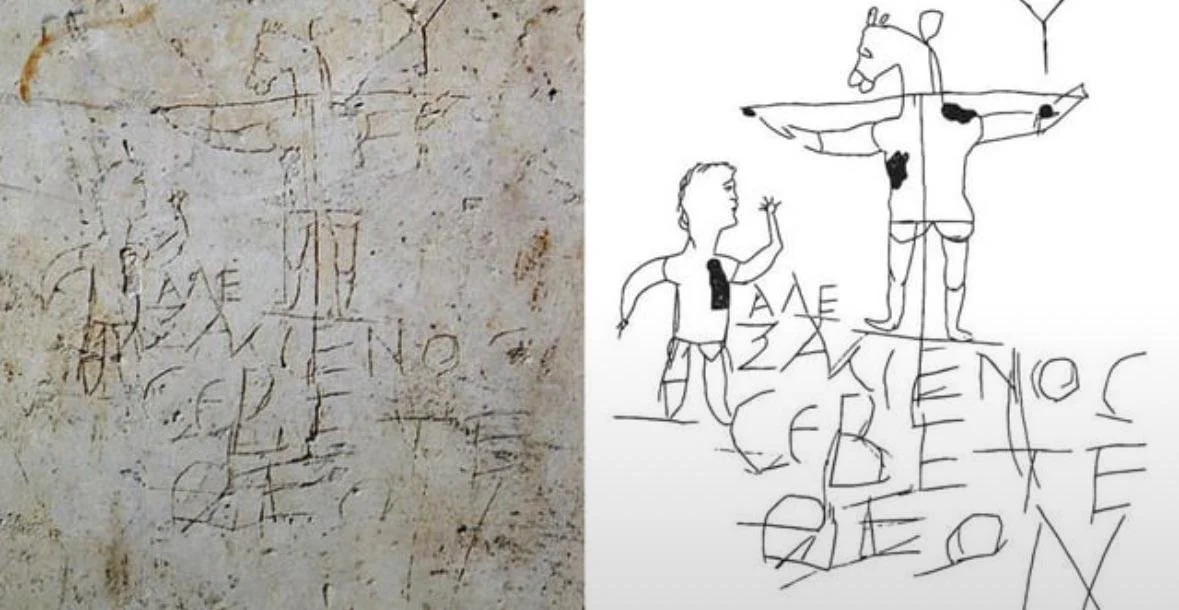
The Alexamenos graffito depicts a christianos worshipping at the foot of a crucified donkey.
Other Jews had a different name for the movement. Nazōraios—Nazarenes—after Jesus's hometown (or possibly a play on "consecrated ones," the Nazirites). The Hebrew equivalent, Notzrim, survives in modern Israeli Hebrew as the word for “Christian.” It's the older, more respectful term, given by people who saw the movement as an internal Jewish argument rather than a foreign cult.
The followers of Christ kept it anyway. First Peter 4:16 makes it explicit: “if you suffer as a Christianos,” don't be ashamed. Glorify God that you bear this name. The insult became a title. Ignatius of Antioch—writing in the early second century on his way to martyrdom—uses it as a badge of honor. Polycarp does the same. Justin Martyr makes it the centerpiece of his defense of the faith to Roman authorities.
This is not a small thing. Reclaiming a slur requires a community confident enough in its identity to refuse the shame the slur was designed to impose. The early christianoi were not that confident—they were a marginalized, frequently persecuted minority in a hostile empire. And they kept the name anyway. That's a form of defiance that doesn't require weapons.
There's something here for military communities to recognize. "Grunt," "jarhead," "squid," "zoomie"—military slang has always included terms that outsiders use dismissively and insiders wear with pride. The mechanism is the same: take the thing meant to diminish you and carry it differently. Not to neutralize the original contempt, but to signal that the contempt didn't land.
In God Is a Grunt, the argument runs that the church has always included soldiers and veterans—not despite its identity but because of it. A faith tradition that begins by reclaiming an insult about slavery to a crucified man is not going to be squeamish about associating with grunts. The question is whether the church in its current civilian-majority form remembers what it was like to be the ones other people were naming.
It does not, for the most part. But that's what second editions are for.