GruntGod 2.5.5: What Should We Do?
The Soldier's Question Across Luke
This is drawn from my revision of God Is a Grunt. A literary pattern across Luke that didn't fit neatly in the main chapter.
Soldiers in Luke keep asking the same question.
In Luke 3, the crowd responds to John's preaching by asking "What then should we do?" A tax collector asks the same thing. Soldiers ask the same thing. The question is the chapter's organizing refrain—it is the response of people who have heard something that demands a change in behavior and want to know what that change looks like in practice.
John's answers are specific to each group. To the general crowd: share what you have. To the tax collectors: collect only what you're authorized to collect. To the soldiers: no extortion, no false accusations, be content with your pay.
Notice what John does not say to the soldiers, whom I call Rakes. He does not say: leave the military. He does not say: your profession is incompatible with repentance. He says: do your job without using your position to take what isn't yours. The abuses he names (extortion, false accusation) are abuses of military authority, not the exercise of it.
This pattern—soldiers asking what to do and receiving practical rather than vocational answers—recurs across Luke-Acts. In Acts 16, Dez the jailer asks Psaul and Silas, "What must I do to be saved?" The answer is not "leave the jail." It's "believe on the Lord Jesus, and you will be saved, you and your household."
These men are asking the same question across the span of one author's two-volume work. And the answer is always the same structure: here is what you believe, here is how you behave differently within the life you already have. Luke is not writing a vocation-change manual. He is writing a character-formation text.
This is worth sitting with for a minute, especially for military families who have been told—sometimes directly, sometimes by ambient church culture—that military service is in fundamental tension with Christian faith. Luke does not share that assumption. His soldiers ask what to do and they get answers suited to people who are going to continue being soldiers. Christianity doesn't extract them from their lives. It reforms the lives they already have.

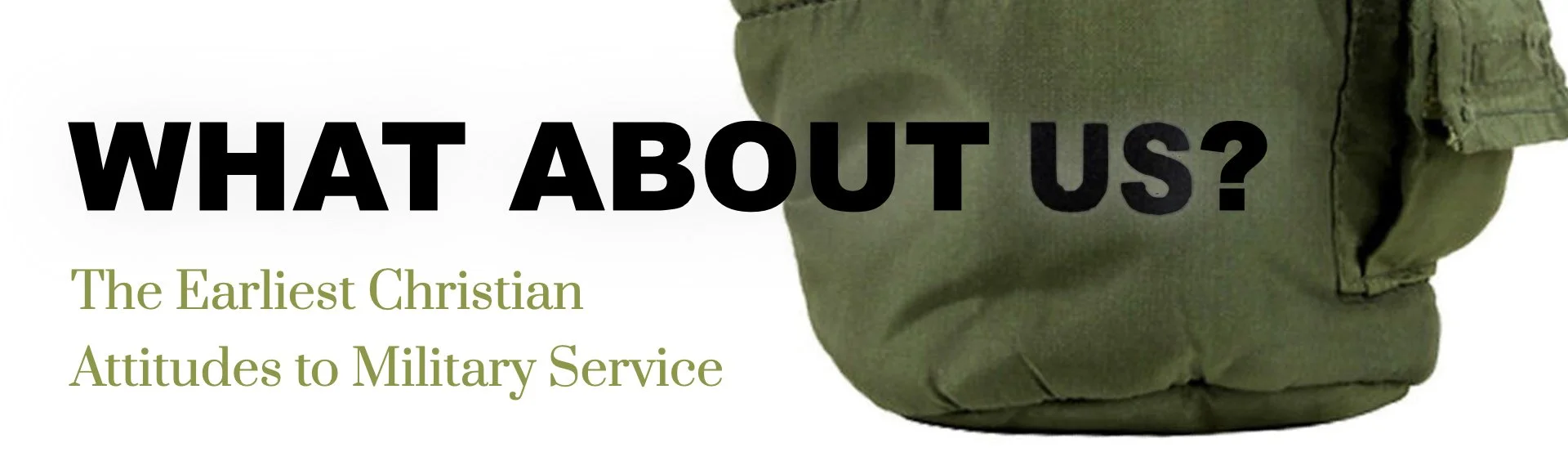
When soldiers asked John the Baptist "What about us?"—they weren't asking permission to quit. They were asking how to serve faithfully. He answered them. Jesus baptized them. The New Testament never told them to choose.
This canteen cover decal carries the question military families have been asking in church pews for generations. Stick it where it belongs: somewhere people will have to reckon with it.
Pairs well with its namesake essay 😉
Virtue ethics in the classical tradition—the framework this whole book is operating within—works exactly this way. You don't become virtuous by changing your profession. You become virtuous by practicing the right habits within whatever institutional life you occupy. John is a virtue ethicist before the vocabulary existed. So is Luke. The soldiers asking "What should we do?" aren't looking for an exit. They're looking for formation.
That's what they got. That's what they've always been offered. At least, when the church was paying attention it was.