#GruntGod ch.8 (Pachomius and Monasticism)
The eighth installment of a revolutionary exploration of faith and service.
This week I'm releasing five posts drawn from the cuts I made while revising Chapter 2.8 of God Is a Grunt — the Pachomius chapter. Every morning at 0800, Monday through Friday, one post drops.
If you've been following the second-edition revision, you know the drill: what gets cut from the primary chapter doesn't disappear — it goes here. These posts are for readers who want the exegetical and historical scaffolding underneath the theological argument. Scholars, seminary types, people who read footnotes. You know who you are.
Here's what's coming:
Monday, 2.8.1— “What 'Monk' Actually Means”
The word we translate 'monk' has been pointing in the wrong direction for centuries. This post untangles the Greek monachos from the Syriac Ihidaya, traces the Nazirite vow tradition through the family of Jesus, and shows how the distinction between 'lives alone' and 'sleeps alone' changes everything about how we read early monasticism.
Tuesday, 2.8.2 — “The Prophet in the Wilderness”
Elijah wore a leather belt and lived rough not because he preferred it, but because it was a rebuke. So did John the Baptist. So did the Essenes — in their own self-righteous way. This post traces the political theology of biblical asceticism and introduces the Syrian Christians who figured out that standing out is not the same thing as standing apart.
Wednesday, 2.8.3 — “Jerome and the Hermits”
In 375 CE, Jerome wrote a biography of Paul of Thebes, the so-called 'first hermit,' whose primary qualification for the title was fleeing persecution and finding a cave conveniently stocked with Ptolemaic money. This post reads Jerome's deadpan carefully and asks what it means to make heroes of people whose main achievement was getting away from things.
Thursday, 2.8.4 — “The Military DNA of Christian Monasticism”
The word 'askesis' — the root of asceticism — is the same word Vegetius uses in the Roman military training manual for drilling recruits with wooden swords. It is not a coincidence. This post works through Christian Barthel's scholarship on the Pachomian communities and shows how rank, vows, public correction, and the cingulum all map onto Roman military structure with unsettling precision.
Friday, 2.8.5 — “Standing Out vs. Standing Apart”
The Egyptian hermits fled the cities. The Syrian ascetics built their shanties against city walls and stayed. This post makes the case that the Syrian model is closer to the biblical tradition than the hermit tradition ever was — and that the difference between those two approaches is the theological hinge the whole Pachomius chapter turns on.
—
All five posts are drawn from the revision of God Is a Grunt, second edition. The chapter itself — streamlined for the primary audience of military families — is the argument. These posts are the receipts.
Chapter 7 of the #GruntGod Season Pass includes:
📝 A revised chapter exploring George and martyrdom.
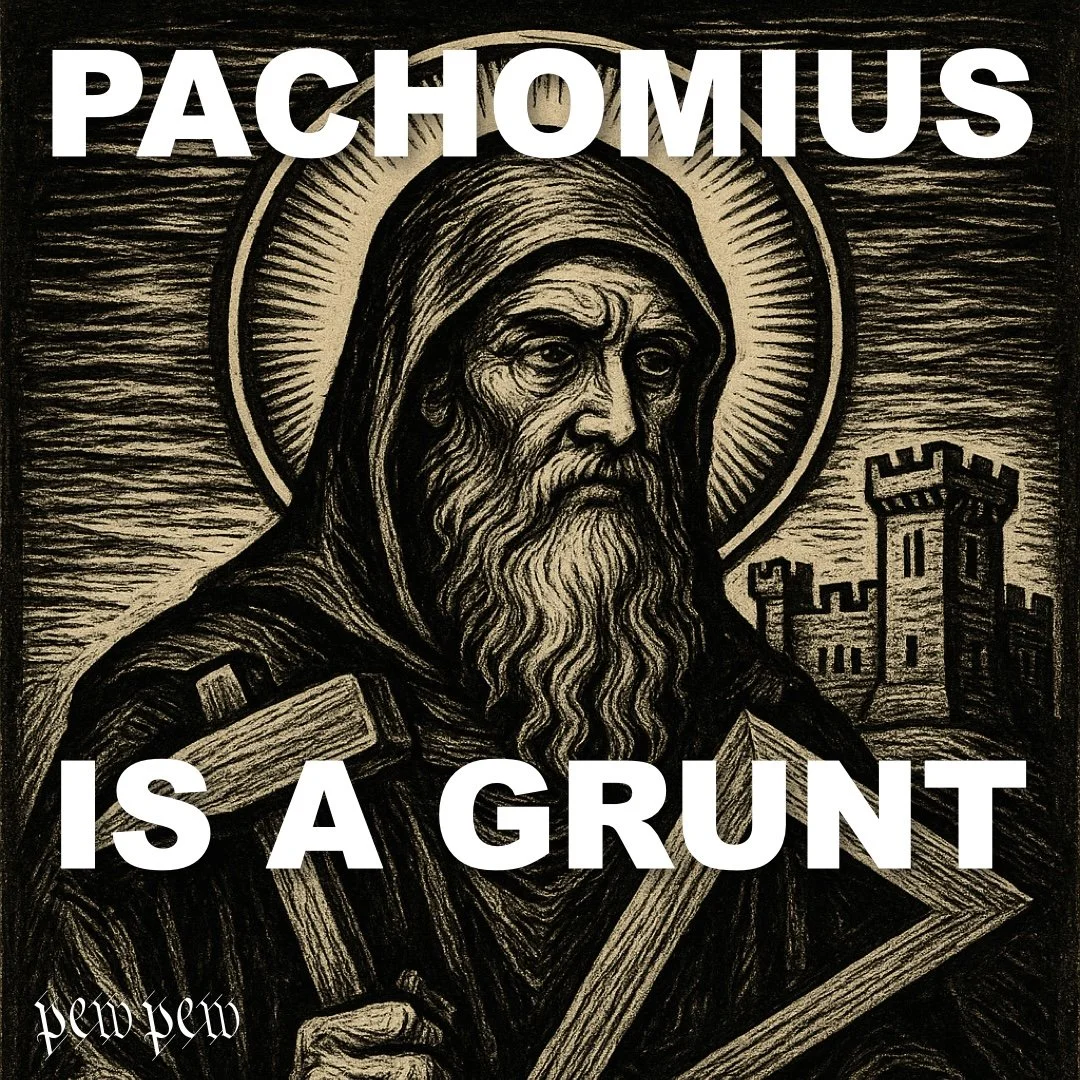
🎨 An original digital icon of Pachomius the Engineer—part of the GruntGod Icon Series
🎧 A high-quality, ad-free MP3 download of the podcast episode, featuring exclusive insights from Rebekah Eklund.
Support Grunt Works
Your purchase helps support our mission to build a better theology for those who serve;
📚 Buy e/books via Bookshop
🎧 Buy audiobooks via Libro
💰 Donate directly via Venmo