GruntGod 2.11.5: From Welsh Wizard to French Battlefield
A 500-Year-Old Prophecy Finds Joan of Arc
This is drawn from the revision of the Joan chapter in the second edition of God Is a Grunt.
Centuries before Joan of Arc was born, a Welsh cleric named Geoffrey of Monmouth wrote a highly embellished pseudo-history called The History of the Kings of Britain. It's the book responsible for popularizing King Arthur and Merlin as we know them, even though both figures were loosely based on real people scholars still argue about today. Geoffrey's Merlin is widely believed to be built on Myrddin Wyllt — "Myrddin the Wild" — a Welsh prophet-figure who, according to tradition, went mad after his people were defeated at the Battle of Arfderydd and fled into the forest, where he began uttering prophecies.
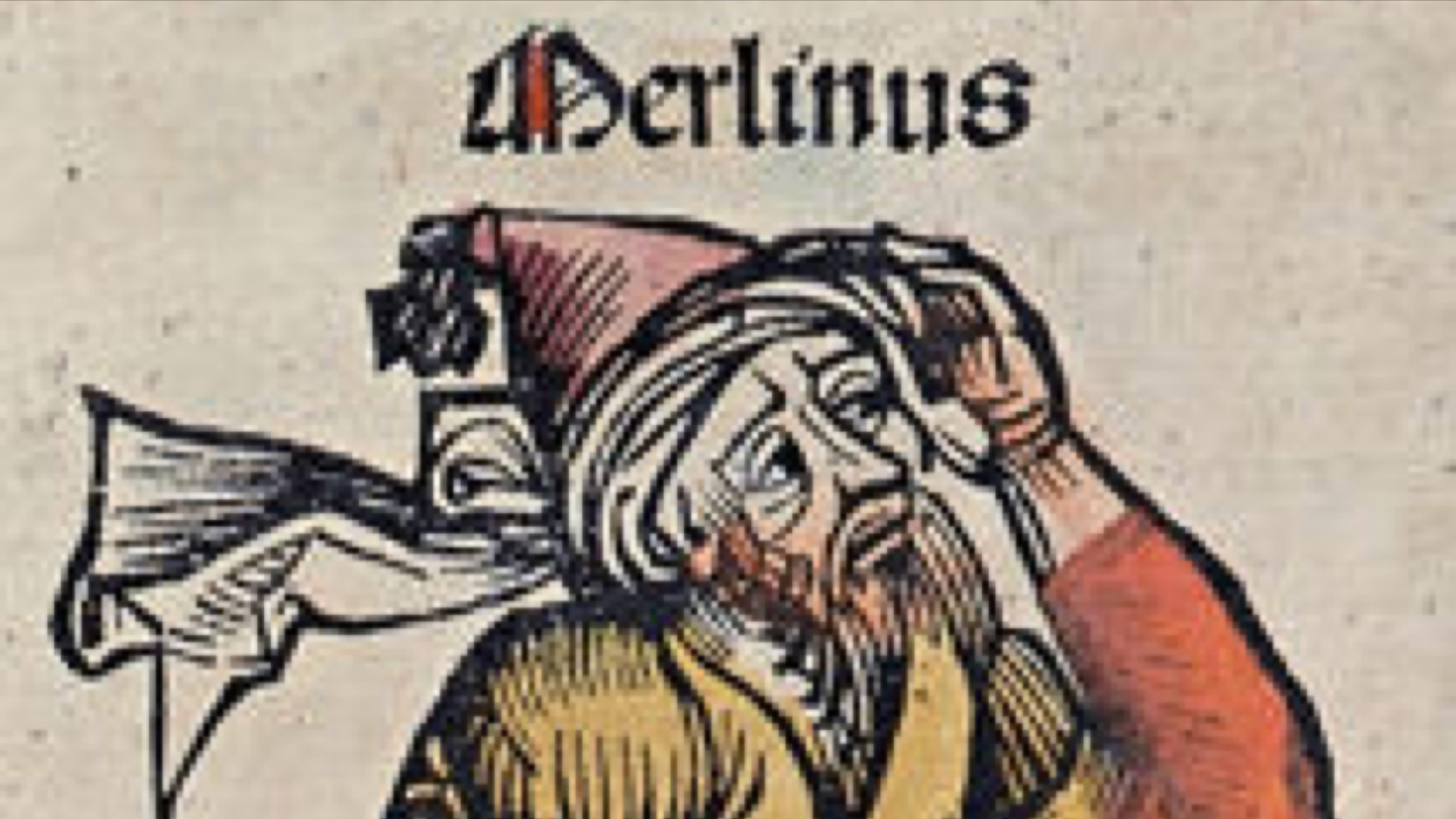
Geoffrey's book was a runaway hit across medieval Europe, and its prophetic material didn't stay put. One recurring prophecy involved a pullus — Latin for a young animal, a foal or chick — who would emerge from the nemus canutum, the "Gray-Haired Wood," and accomplish great deeds. As this material crossed from Britain into France over the following centuries, it picked up local color and got grafted onto local landmarks and local hopes, the way prophetic material tends to do when it's useful to whoever's retelling it.
A generation before Joan, a prophet named Marie Robine of Avignon told King Charles VI that the nemus canutum from the old prophecy was actually the Bois Chesnu, a specific forest bordering Domrémy — Joan's home village. Somewhere in that transmission, the Latin pullus became the French pucelle — "maiden" — and the prophecy's "great deeds" got reinterpreted as driving the English out of France entirely. By the time Joan was a child, this material had circulated widely enough that it was almost certainly part of the region's religious and political air. When she showed up at Vaucouleurs calling herself La Pucelle, she wasn't necessarily inventing a myth about herself from scratch. She was stepping into one that had been under construction for two hundred years and multiple national borders.
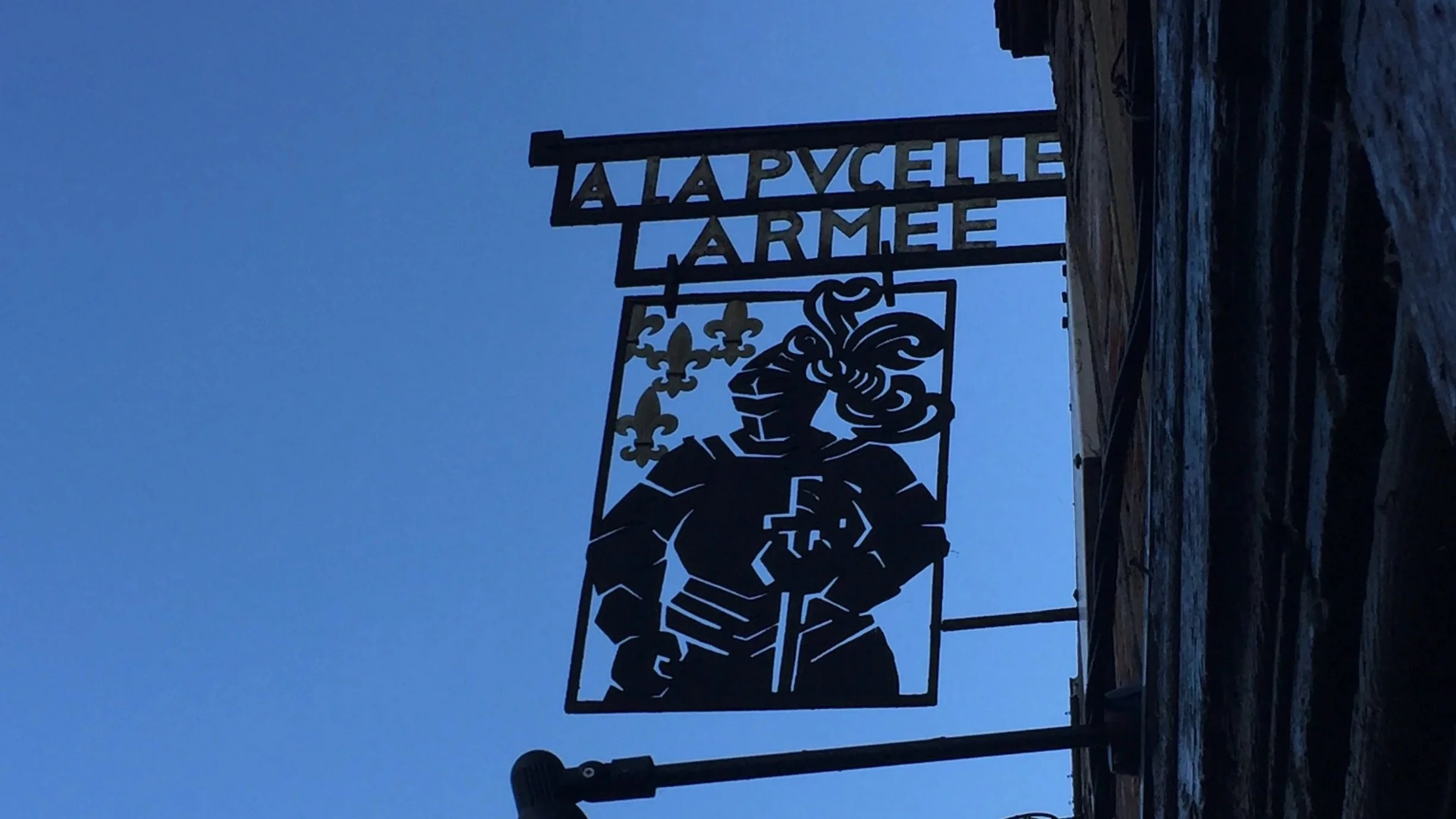
A bar sign in Tours, France, dedicated “a la pucelle armee;” to the Armed Maid.
I think this matters for a reason beyond trivia. It's tempting to read Joan's story as a straightforward account of an illiterate farm girl who heard from God and was simply, purely obedient to a private call — and I think that's true, as far as it goes. But the political and prophetic machinery around her didn't emerge from nowhere. Charles VII wasn't operating in a vacuum when he decided to take an unknown teenager seriously; he had a two-century-old prophecy, freshly reinterpreted by a court-connected mystic, pointing at a very specific forest near a very specific village. That doesn't make Joan's calling less real. But it should make us more careful about how quickly we credit "God told her" as a complete historical explanation, when there was also a very traceable, very human chain of prophetic tradition-building doing real political work in the background. Divine calling and human myth-making aren't mutually exclusive, and Joan's story is a good place to sit with that tension rather than resolve it too fast in either direction.
If you're the kind of reader who wants a citation trail for the Geoffrey of Monmouth material specifically, that's a rabbit hole worth going down on your own — there's a real body of Arthurian scholarship on how the Historia's prophetic material got adapted across medieval Europe, and it's more interesting than most people expect a pseudo-history to be.